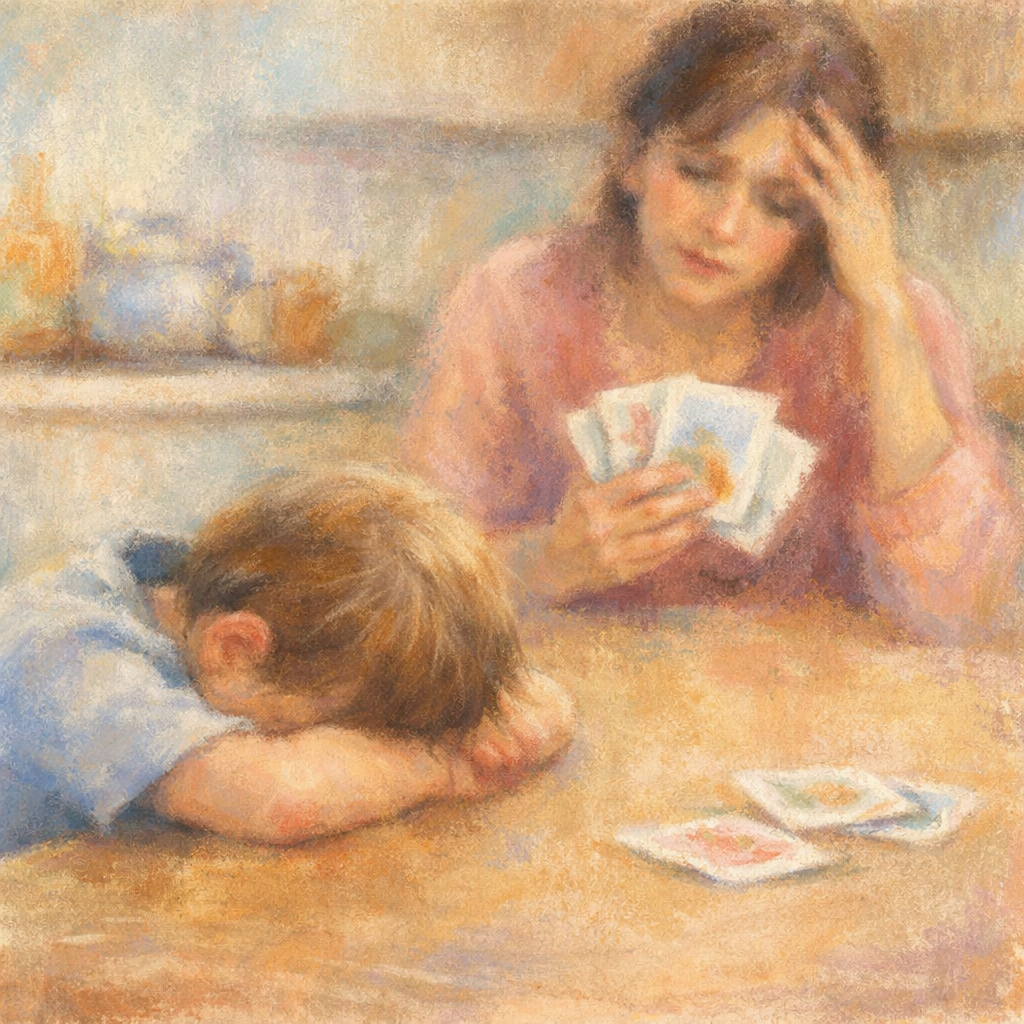
If you’re searching for a speech therapy home program, you’re probably hoping to find a set of activities you can start today to help your child communicate better.
I completely understand. After working as a speech-language pathologist for over 40 years, I wish I could have given every parent the perfect step-by-step program that would work for every child.
The problem is that speech and language difficulties are incredibly varied. A home program that works beautifully for one child may be completely ineffective—or even frustrating—for another.
The good news? There are language-building strategies that help almost every young child develop communication skills. Whether your child has a language delay, speech sound difficulties, or challenges with social interaction, these everyday activities can make a meaningful difference.
In this article, I’ll explain why there isn’t a one-size-fits-all speech therapy home program—and, more importantly, what you can do at home to help.
Why Isn’t There One Speech Therapy Home Program?
Imagine your child needed glasses.
You wouldn’t borrow Grandma’s glasses, put them on your child, and assume they would suddenly see clearly. Your child would first need an eye examination. If they needed glasses, the prescription would be designed specifically for them and adjusted as they grew.
Speech and language therapy works much the same way.
There are hundreds of different communication disorders, and each one requires a different approach. What helps one child may do very little for another.
For example:
- A child who isn’t talking yet needs very different activities than a child who talks in long sentences but can’t pronounce certain sounds.
- A child with a language delay needs different support than a child who stutters.
- A child with autism may need activities that encourage back-and-forth interaction, while another child may need help learning speech sounds.
Children also differ in age, attention span, personality, learning style, and motivation. All of these influence the type of home program that will be successful.
That’s why the best speech therapy home program is one designed specifically for your child after an assessment by a speech-language pathologist.
But while there isn’t one universal therapy program, there are several strategies that benefit almost every young child.
Universal Speech and Language Activities You Can Do at Home
These are the same types of strategies I recommended to hundreds of families throughout my career.
Follow Your Child’s Lead
Rather than directing the play, join your child in whatever has captured their attention. Children learn more language when they’re interested and engaged. The right toys make this easier — see my guide to toys that build speech for simple, open-ended picks that invite this kind of play.
Model Simple Words
Say words clearly and naturally without asking your child to repeat them. Hearing words used over and over in meaningful situations is one of the best ways children learn language.
Respond to Communication Attempts
If your child says a word incorrectly, respond to the meaning rather than pointing out the mistake.
Child: “Teetee!”
Adult: “Yes! There’s the kitty! What a nice kitty!”
You acknowledged the child’s message while giving them another opportunity to hear the correct pronunciation.
Narrate Your Day
Talk about what you and your child are doing throughout the day.
“I’m pouring your milk.”
“You’re putting on your boots.”
“I’m washing the apple.”
This constant exposure builds vocabulary naturally.
Expand What Your Child Says
If your child says one word, repeat it and add one more.
Child: “Car.”
Adult: “Big car!”
As your child’s language grows, your expansions will grow too.
Give Your Child Time to Respond
One of the most powerful speech therapy techniques is also one of the easiest.
Pause. Wait.
Children often need several extra seconds to process what they’ve heard and decide how they want to respond.
Comment More Than You Quiz
Instead of asking constant questions like:
“What colour is that?”
“What’s this?”
“What does the cow say?”
Try making comments instead.
“Look! A cow! Moooo! The cow says mooooo!”
Comments provide language without putting children on the spot.
Read and Sing Every Day
Books and songs expose children to new vocabulary, sentence structures, and sounds in a fun, natural way.
Can Parents Do Speech Therapy at Home?
Parents can absolutely help their children develop communication skills.
In fact, parents are the most important communication partners children have.
However, there’s an important distinction between supporting communication development and providing speech therapy.
Some children with mild delays may make excellent progress using strategies implemented at home recommended by their speech-language pathologist.
Children with more significant communication disorders usually need individualized assessment and treatment.
Your role isn’t to replace your child’s therapist. Your role is to make the thousands of everyday interactions between therapy sessions count.
If Your Child Has Speech Sound Difficulties
Speech sound disorders are especially difficult to treat using a generic home program because therapy depends on exactly which sounds are affected and why.
Imagine two two-year-olds.
One child says almost no consonants and leaves syllables out of words. Another child only has difficulty saying s, l, and r. The second child may actually be developing completely normally, since those sounds often develop later. The first child, however, would likely benefit from speech therapy.
Both children are two years old. Neither should receive the same speech therapy exercises. That’s why individualized assessment matters.
Helpful Speech Activities at Home
Even though speech therapy exercises should be individualized, parents can still support speech development by:
- responding to communication attempts rather than correcting mistakes
- modelling correct pronunciation naturally
- using gestures, signs, or pictures if communication is frustrating
- occasionally “playing dumb” to encourage clearer communication
For example:
Child: “Daddy got car.”
Adult: “Yes, Daddy has a car.”
Child: “No… car!”
Adult: “Daddy’s car?”
(Child points to Daddy’s arm.)
Adult: “Oh! Daddy’s scar! I thought you said car. Daddy does have a scar!”
This helps your child recognize that the way they say sounds affects the meaning of the words. This recognition alone often helps some children make changes to the way they say words.
Other fun activities include:
- rhyming games
- clapping syllables
- reading books with repetitive sounds
- modelling difficult words naturally throughout the day
Avoid telling your child they’re “saying it wrong.” Instead, simply provide the correct model in a positive, encouraging way.
If Your Child Has Difficulty with Social Interaction
Children who struggle with social communication benefit from activities that naturally encourage back-and-forth interaction.
Choose something your child enjoys, such as:
- lining up cars
- marble runs
- swinging
Give a few cars, marbles, or pushes on the swing, but keep control of the materials, then wait expectantly.
Your child might reach, point, hold their hand palm up, look at you, gesture, hand you something, or use a word to request “more.”
Respond immediately. These simple exchanges become the building blocks of conversation.
A Quick Guide
| If your child… | Start with… |
|---|---|
| Isn’t talking much yet | Language-building strategies like modelling, narrating, expanding, waiting, and reading together. |
| Talks but is difficult to understand | Speech-support strategies like rhyming, “playing dumb,” and modelling—plus an assessment if many sounds are difficult to understand. |
| Has difficulty interacting | Activities that encourage back-and-forth interaction and shared attention. |
When Should You Seek a Speech Evaluation?
If your child:
- isn’t saying words by around 18 months,
- is very difficult to understand at age two,
- seems frustrated when trying to communicate,
- loses skills they previously had, or
- you’re simply worried,
don’t wait.
Many communities have waiting lists for speech-language services. It’s much easier to cancel an appointment because your child caught up, than to wish you had put their name on the list months earlier.
Early support gives children the greatest opportunity to build strong communication skills before they begin school.
Frequently Asked Questions
Is there a speech therapy home program that works for every child?
No. Because communication disorders are so varied, there isn’t one home speech therapy program that works for every child. There are, however, many language-building activities that benefit most young children.
What speech therapy activities can I do at home?
Reading together, modelling language, expanding what your child says, narrating your day, waiting for your child to respond, and encouraging back-and-forth interaction are excellent activities for many young children.
Can I do speech therapy at home by myself?
Parents play an incredibly important role, but children with significant speech or language disorders need individualized assessment and therapy from a speech-language pathologist. Parents are most successful when they carry over strategies recommended by their child’s therapist into everyday routines.
A Thought from Cheryl
I wish there were a magic speech therapy home program that worked for every child.
If there were, every speech-language pathologist would be using it, every parent would own it, and it would be sold in every bookstore.
The truth is that communication is wonderfully complex. That’s why speech-language pathologists spend a minimum of six years in university studying child development, language, speech, learning, the brain, vocal anatomy, and communication disorders before they begin helping families.
But please don’t underestimate your own role.
Your child doesn’t need you to become their speech therapist. They need you to be their parent.
Reading bedtime stories. Singing songs in the car. Talking while you make supper. Comforting them when they’re upset. Laughing together. Playing together. Creating a home filled with conversation and connection.
If your child also needs speech therapy, think of yourself as an essential member of the team—not the entire team.
That may be the greatest gift you can give your child.
The Bottom Line
There isn’t one speech therapy home program because every child’s communication needs are unique.
The best “at-home speech therapy” isn’t about buying a special program. It’s about filling everyday life with rich conversations, responsive interactions, books, songs, and play.
Those simple moments, repeated thousands of times throughout childhood, build the foundation for strong communication.
And if your child needs extra help, remember that asking for support isn’t a sign that you’ve failed.
It’s simply the next step in helping your child reach their full potential.