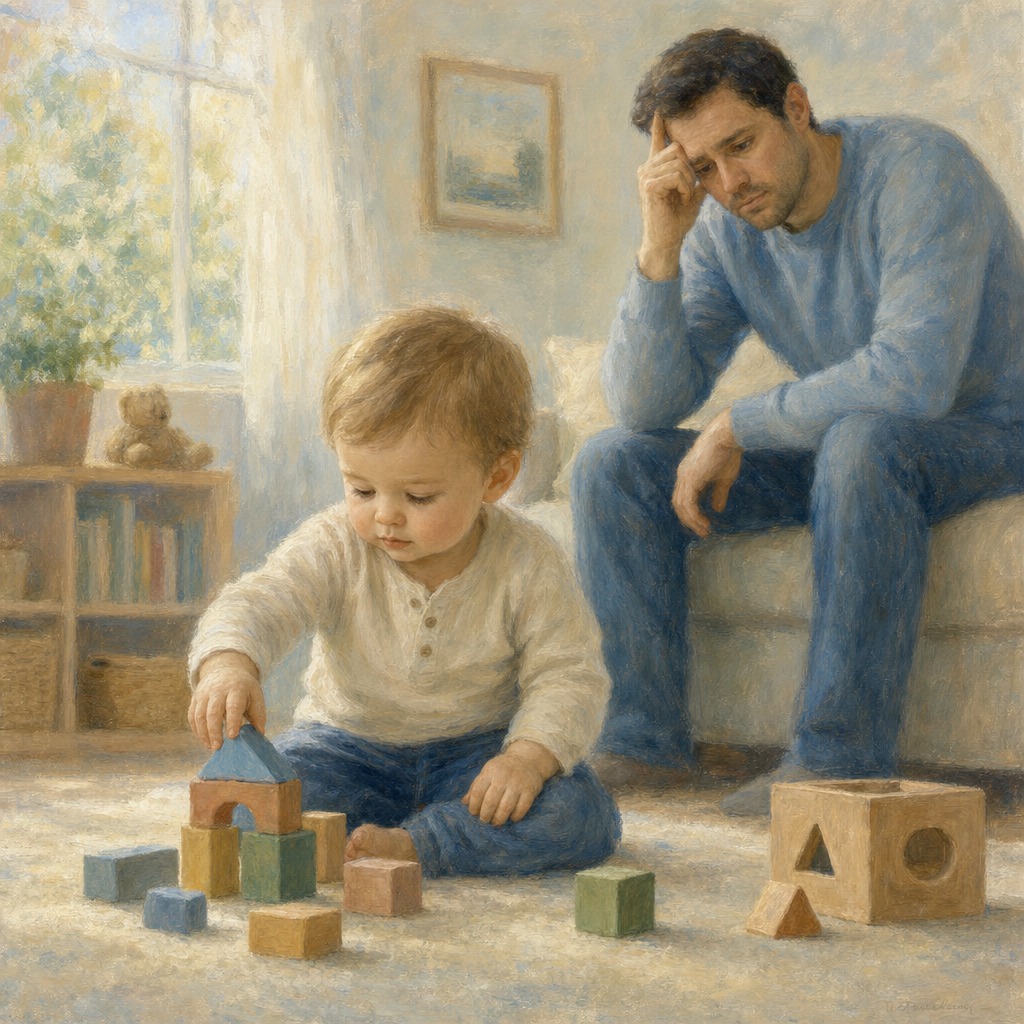
Some factors are simply part of who your child is. Every child develops at their own pace and has their own strengths and challenges. Other factors are environmental — that means you, the caring adults who spend time talking, playing, singing, rhyming, and reading with your baby every day. These early interactions provide the foundation for language development.
What Is a Phonological Disorder?
One of the most common — and fortunately one of the most treatable — communication disorders in young children is a phonological disorder. Children with a phonological disorder can usually hear sounds normally, but their brains organize and use speech sounds differently than expected.
As a result, they may leave off sounds at the ends of words, use the wrong number of syllables, or replace one sound with another. For example:
- sun becomes tun
- zoo becomes doo
- fine becomes pine
When Children Are Communicating but Hard to Understand
During my career, I met many children who were actually saying quite a few words. The problem wasn’t that they weren’t talking — it was that their speech was so difficult to understand that their parents didn’t realize they were communicating.
When adults don’t recognize these early communication attempts, they may unintentionally miss opportunities to respond and encourage further language development. If you find yourself unsure whether your child is actually talking, an SLP assessment can bring welcome clarity.
When Should You Seek Help?
If your child is not talking by about 16 months of age, I recommend arranging an assessment with a registered speech-language pathologist (SLP).
An SLP will look at many areas of development, including:
- understanding of language
- social interaction
- play skills
- speech sound development
- oral-motor skills
- hearing concerns
- overall communication development
If needed, the SLP may also recommend referrals to other professionals — such as an audiologist, an Ear, Nose and Throat (ENT) specialist, a pediatrician, an occupational therapist, or a psychologist.
Don’t Wait to Start the Referral Process
Because waiting lists can sometimes be long, I usually encourage parents to start the referral process sooner rather than later. If your child’s language suddenly takes off before the appointment, that’s wonderful! You can always decide whether the assessment is still needed.
Many parents find it reassuring to keep the appointment anyway, as it provides an opportunity to understand why their child was late to talk and whether there are any areas that should continue to be monitored.
Trust Your Instincts
Well-meaning family members — and sometimes even healthcare providers — may reassure you by saying things like:
“Uncle Eddie didn’t talk until he was five, and he turned out fine.”
Stories like these can certainly be comforting, but every child is different. Over the years, I found that parents’ instincts are often remarkably accurate. If you have an ongoing concern about your child’s communication development, it’s worth having it evaluated.
Sometimes everything is perfectly normal, and hearing that from a professional can bring tremendous peace of mind. If there is a delay, identifying it early gives your child the best opportunity to benefit from intervention.
One Thing You Can Do Today
12 to 18 Months — Take a few minutes to look up typical communication milestones for your child’s age. If your child is not meeting several of those milestones, or if something simply doesn’t feel right, consider making an appointment with a registered speech-language pathologist.
18 to 24 Months — Keep a simple record of the words and sounds your child uses consistently. Even approximations and signs count. Bring this list to your child’s next appointment — it will help any professional you see get a clearer picture, faster.
Any Age — If you are worried, act on it. You do not need a referral to contact a registered speech-language pathologist in most provinces and states. Starting the process early — even if the waiting list is long — puts your child first in line for support if it turns out to be needed.
A Thought from Cheryl
After more than 40 years as a speech-language pathologist, I can tell you with confidence: parents know their children best. Trust that knowledge.
I have sat across from families who were told to wait and see — and I have sat across from families who came in early, got answers, and watched their child thrive with the right support. Early identification really does make a difference. There is no downside to getting an assessment. There can be a real cost to waiting too long.
The Bottom Line
Learning to talk is a skill, just like learning math, music, sports, art, or making friends. Every child has strengths, and every child has areas that may require a little extra support.
If communication happens to be your child’s challenge, it is not the end of the world. Effective therapy is available, and children often make remarkable progress. The earlier concerns are identified, the greater the opportunity to support speech, language, social development — and later reading success.
Watch this short video for more on the early signs to look for.