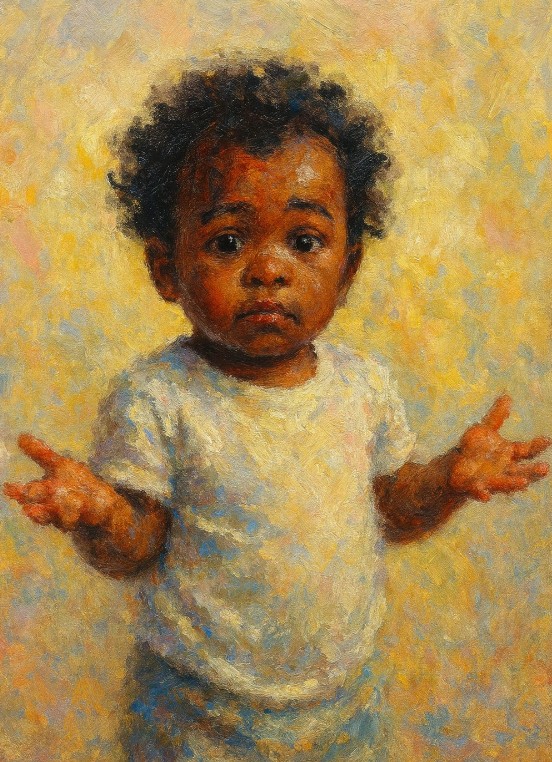
One of the most common questions parents search online is, “My 18-month-old is not talking. Should I be worried?” Others worry about a 2-year-old not talking or wonder whether their child has a speech delay.
The reassuring answer is that every child develops at their own pace, and there is a wide range of what is considered typical. Rather than focusing only on the exact age your child says their first word, it helps to ask a different question:
“Is my child learning to communicate?”
Communication is much bigger than talking. Long before children say their first words, they are learning to enjoy back-and-forth interactions with the people they love. They learn to look at faces, listen to voices, take turns, use gestures, understand words, play with others, and eventually use sounds and words to express themselves. Many speech-language pathologists would argue that these early social interactions are the most important part of communication because they lay the foundation for everything that follows.
Most children say their first real words sometime between 10 and 14 months, with many saying their first word around their first birthday. Some children talk a little earlier, while others need more time.
Before Words Come Communication
Long before babies say their first words, they are busy learning the skills they will need to become successful communicators. Your baby is learning to:
- look at your face
- listen to voices
- smile and take turns
- recognize familiar people
- understand everyday words
- point to things they want
- babble and experiment with sounds
- copy gestures and actions
- follow simple directions (Give it to Daddy. Throw it in the garbage. Be nice to the puppy.)
These early skills are every bit as important as learning first words.
How Many Words Should an 18-Month-Old Say?
Most 18-month-olds say around 10 to 20 words, and some say many more—up to 50 or so. But there’s a wide normal range, and the exact number matters less than whether your child is slowly adding new words over time and understanding much more than they can say.
If you’re keeping a mental tally, here’s a rough guide to typical word counts by age (these are averages, not pass-or-fail tests):
- 12 months: about 1–3 words (often “mama,” “dada,” and one more)
- 15 months: around 5–10 words
- 18 months: around 10–20 words, and beginning to understand simple directions
- 24 months: around 50 words, and starting to put two words together (“more milk,” “bye daddy”)
What counts as a “word”? More than you might think—and this is where a lot of parents undercount. A word counts if your child uses the same sound consistently to mean the same thing, even if it isn’t perfectly clear. So “ba” for ball, “wawa” for water, and animal sounds like “moo” and “woof” all count. If your child uses baby signs, those count too. Little approximations are real words in the making.
And remember: talking is only half the picture. A strong 18-month-old communicator also understands far more than they say, and uses gestures—pointing, waving, reaching up to be held, shaking their head “no.” Those are all signs that language is developing right on track, even when the spoken word count is still small.
If your 18-month-old is saying only a few words and isn’t using gestures or doesn’t seem to understand simple requests, that’s worth mentioning to your doctor—not as a cause for alarm, but as a simple reason to check hearing and development. Early support, if it’s ever needed, works wonderfully at this age.
These milestones aren’t magic numbers. They simply help us decide whether a child’s language system appears to be developing along the expected path. Some children reach them a little earlier and others a little later, but they give us a helpful guideline for knowing when it may be time to look more closely.
Many Things Influence When Children Start Talking
Some factors are outside your control. These include:
- hearing
- motor development
- thinking and learning skills
- language development
- how your child’s brain processes sounds
- personality and temperament
Some babies are content to quietly watch everything happening around them. Others seem eager to communicate from an early age.
If your child has hearing loss, Down syndrome, cerebral palsy, a cleft palate, or another developmental condition, your speech-language pathologist can help you understand what milestones to expect and recommend activities that encourage communication.
The Good News — You Can Make a Difference
One of the biggest influences on language development is your child’s everyday environment. Children learn language by hearing it used in meaningful, enjoyable interactions throughout the day.
Talk during diaper changes. Talk while preparing meals. Sing songs. Read books together. Play on the floor. Respond when your baby smiles, babbles, points, or gestures.
The goal isn’t to teach your baby to memorize words. It’s to fill their day with warm, back-and-forth conversations that make communication enjoyable.
Signs Count as Words
Many parents are surprised to learn that signs count as words.
If your child consistently uses the same sign to communicate the same idea, it counts as a word. Neither spoken words nor signs need to be perfect. They simply need to be consistent and recognizable.
For example:
- “Baba” for bottle
- “Key” for kitty
- “Nana” for banana
- tapping little fists together instead of making the adult sign for “more”
Celebrate these early attempts at communication. They are exciting milestones on your child’s language journey.
When Should I Seek Help?
Parents often wonder whether their child is simply a “late talker” or whether they have a speech delay.
If your 18-month-old is not talking yet, or your 2-year-old is using very few words, it’s natural to feel concerned. Trust your instincts. If you are worried about your child’s hearing, social interaction, understanding, or use of language, don’t wait to ask questions.
Well-meaning family and friends may tell you, “Don’t worry. He’ll grow out of it.” While they are trying to be reassuring, no one can accurately make that prediction without looking at your child’s overall communication skills.
Early support can make a tremendous difference, and because there is often a waiting list to see a speech-language pathologist, asking for a referral sooner rather than later is usually the best approach.
One Thing You Can Do Today
Birth to 6 Months — Talk to your baby during everyday routines like feeding, diaper changes, dressing, and bath time. Your baby may not understand every word yet, but they are learning that talking with people is enjoyable and important.
6 to 12 Months — Introduce a few simple signs during everyday routines. Good first signs include: more, please, help, eat, drink, milk, Mom, Dad, Grandma, Grandpa, puppy, kitty, ball, book, and wash. Always say the word while making the sign. Hearing the word and seeing the sign together strengthens communication.
12 to 18 Months — Look at simple picture books together every day. Encourage your toddler to point to familiar pictures, then connect the picture to the real object whenever possible.
“There is the puppy in your book. Where’s our puppy? There he is!”
“That’s a ball. Here’s your ball. Let’s roll it!”
Making these real-life connections helps children understand that words represent real people, objects, and actions in their world.
18 to 24 Months — Whether or not your child is talking very much yet, they should be ready to learn simple pretend play routines, such as feeding a toy animal, putting Teddy to bed, or giving a doll a drink. Pretend play helps children develop language because it teaches them to use objects, actions, and words together in meaningful ways. A few simple props make this easier — see my list of the best toys for language development for the ones I recommend.
Watch these short videos to see simple pretend play routines in action:
Watch this short video to learn more about the important communication skills that develop before a child’s first words.