Yes! Most two year olds are talking — and if your child isn’t, it’s worth finding out why.
One of the most common questions parents ask is, “Can 2 year olds talk?” If you’ve been wondering the same thing, you’re certainly not alone.
Most two year olds are using words every day. They are beginning to combine words into little phrases, follow simple directions, and enjoy communicating with the people around them. If your child isn’t doing these things yet, try not to panic — but don’t ignore your concerns either. The earlier you understand what’s going on, the sooner you can help your child.
What Does Language Look Like at Age Two?
The average two year old says about 250 words, although there is a wide range. Some children may say around 50 words, while others have vocabularies of 500 words or more.
Remember that words do not have to sound perfect to count. If your child consistently says “nana” for banana or “ba” for ball, those still count as words if they use them the same way each time.
By age two, children are usually combining words into short phrases such as:
- My Teddy
- Daddy home
- More please
- No bath
- Soup all gone
Every child develops at their own pace, but most two year olds are becoming much more interested in using language to tell us what they want, what they see, and what they’re thinking.
Can Two Year Olds Understand More Than They Can Say?
Absolutely!
In fact, most two year olds understand far more than they can express.
They can usually follow simple directions — even silly ones — such as:
- Put your boots in the bathtub.
- Put your shoe on your head.
- Put the ball in Daddy’s shoe.
Now, because they’re two, they may not always want to follow directions! But when they’re in a cooperative mood, they usually understand exactly what you’re asking.
Two Year Olds Are Learning About Feelings Too
As their language grows, children also begin talking about emotions.
You may hear things like:
- Grandma sad.
- Puppy owie.
- Me mad.
- Kiss boo-boo.
This growing awareness of feelings is an important part of both language development and social development.
Pretend Play Takes Off Around Age Two
Another exciting milestone at this age is pretend play.
As language develops, imagination grows too.
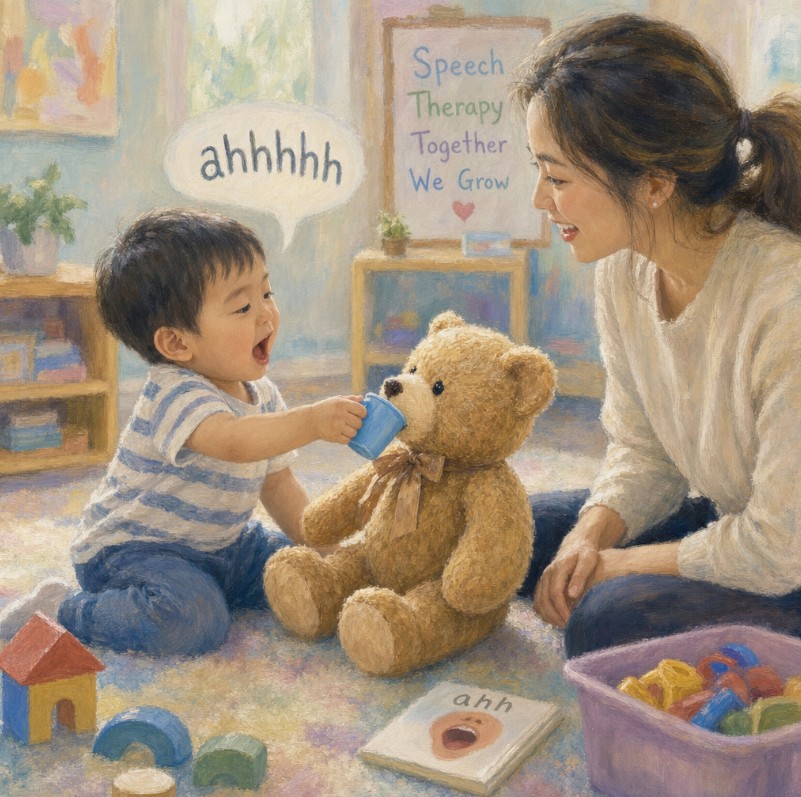
A two year old might feed Teddy, tuck a doll into bed, stir pretend soup, or make toy animals talk to one another. Once they learn a simple play routine, they often begin adding their own ideas and surprises. (Simple, open-ended toys like these work best — see my full toy list for more.)
Pretend play is wonderful for building language because children learn new words while acting out everyday experiences.
They also begin helping solve simple pretend problems.
If you say, “Oh no! Teddy is cold,” your child might look for a blanket. If you can’t find your keys or your shoes, they may eagerly help you search.
These little problem-solving moments are helping build both thinking skills and language.
Every Two Year Old Develops Differently
No two children develop in exactly the same way.
Some children are naturally chatty, while others are quieter. Some begin combining words soon after their second birthday, while others need a little more time.
What matters most is that your child continues making progress and is using communication to connect with the people around them.
When Should I Be Concerned?
If your two year old is not talking yet, the most important thing is to find out why.
There are many possible reasons a child may not be talking, including:
- hearing difficulties
- a language delay or language disorder
- difficulty producing speech sounds
- differences in social communication
- other developmental concerns
Consider making an appointment to see a speech-language pathologist if your child:
- says fewer than about 50 words
- is not combining two words together
- rarely tries to communicate using words, sounds, or gestures
- does not seem to understand simple directions
- has stopped using words they previously used
- becomes frustrated because they cannot communicate their needs
The good news is that speech-language pathologists work with children like this every day. An assessment can help identify what is causing the delay and determine whether your child would benefit from speech therapy.
What Does Speech Therapy for a 2 Year Old Look Like?
Many times during my 40+ years as a speech-language pathologist, parents asked me, “Surely my two year old is too little for speech therapy! What would you even do with them?”
The answer is … we play!
Speech therapy for a 2 year old rarely looks like what adults imagine. There are no desks, worksheets, or long practice drills.
Instead, therapy happens during activities that young children naturally enjoy.
If a child is just beginning to communicate, we might:
- blow bubbles while encouraging eye contact and turn-taking
- play with toy animals while modelling animal sounds and signs such as “more”
- read simple picture books together
- play with cars, blocks, or dolls while introducing the easiest beginning words in English — words similar to the sounds children use when they babble
- use songs, gestures, and games to encourage communication
As children begin using words, therapy grows with them. The activities become a little more challenging while still feeling like play.
Every therapy session is carefully planned around the child’s current skills. We work “just above” what they can already do so they continue making progress without becoming frustrated.
Parents are also an important part of speech therapy for a 2 year old. Your speech-language pathologist will show you simple strategies you can use during meals, bath time, book reading, and playtime so your child has many opportunities to practise every day.
If your child has an oral motor concern, your SLP might suggest activities such as blowing bubbles or licking ice cream. If your child needs to work on the “m” sound, your SLP might ask you to practise at mealtime: “Mmmm, good!” Easy and fun!
One Thing You Can Do Today
If your two year old isn’t talking very much, start by making communication fun.
- Follow your child’s interests.
- Get down on the floor and play together.
- Use short, simple phrases they can copy.
- Pause and give them time to respond.
- Use gestures or simple signs if they help reduce frustration.
- Start with sounds like “mmmoooo, baaaaa, yummy, uh-oh, or ahhh.”
Most importantly, celebrate every attempt your child makes to communicate — even if the word isn’t perfect yet.
A Thought from Cheryl
One thing I’ve learned over my 40+ years as a speech-language pathologist is that parents sometimes don’t realize how many words their child is actually trying to say.
Young children’s pronunciation is still developing, so their words may sound quite different from adult speech. If your child consistently uses the same sound or simplified word for the same object or person, that usually counts as a word.
Celebrate every attempt to communicate. Your excitement and encouragement help your child realize that communicating with others is fun and worthwhile.
The Bottom Line
So … can 2 year olds talk? Yes. Most do.
If your child isn’t talking as much as you expected, don’t assume they’ll simply “grow out of it.” On the other hand, don’t panic.
The earlier you ask questions, the sooner you’ll understand what’s happening. Whether your child simply needs more time or would benefit from speech therapy for a 2 year old, early support can make a tremendous difference.
Parents know their children best. If something doesn’t feel quite right, trust your instincts and ask for help. Early intervention gives children the best opportunity to develop the communication skills they’ll use for the rest of their lives.