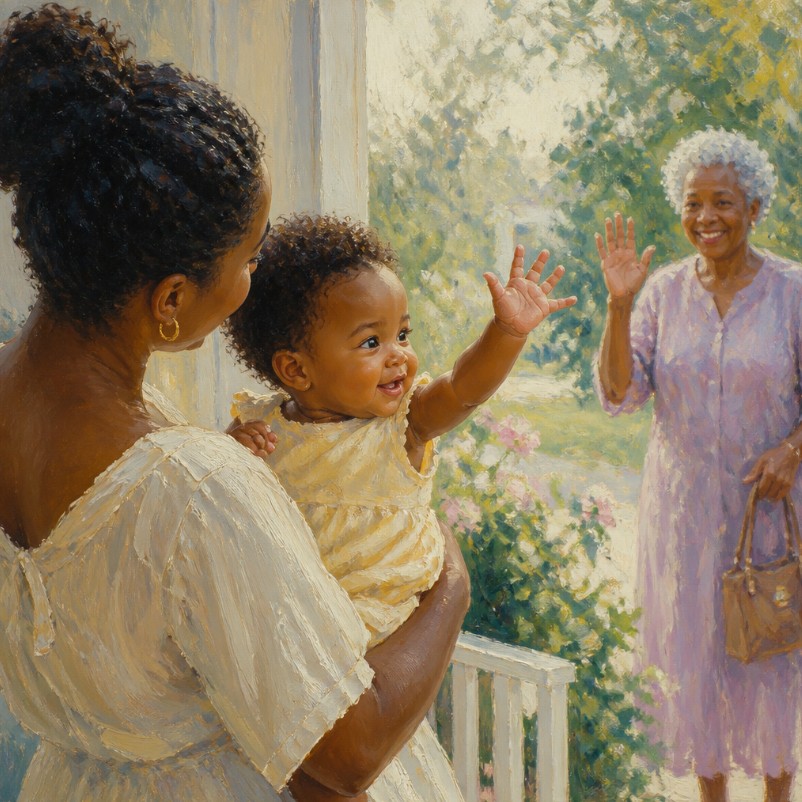
Few things are sweeter than the first time your baby waves bye-bye, claps after a song, points excitedly at a puppy or blows you a very enthusiastic kiss. These little gestures are adorable—but they are also important signs that your baby is learning to communicate.
Parents often wonder: When do babies clap? When do babies start waving? When do babies start pointing? And when do babies blow kisses?
Like most developmental milestones, there is a wide range. Many of these gestures begin appearing during your baby’s first year and continue developing throughout the early toddler months.
Before your baby can say, “Look at that dog!” they may point toward it and look back at you. Before they can say, “Pick me up,” they may raise both arms toward you. Gestures give babies a way to share ideas, make requests and enjoy little conversations before they have the words to do so.
Why Are Gestures Important?
Watching your baby learn to clap, wave, point and use other gestures is an excellent way to observe their social and communication development.
Gestures involve many different skills. Your baby must:
- Watch what another person is doing
- Understand that the movement has meaning
- Remember what they saw
- Coordinate their body to copy the movement
- Learn when to use the gesture during an interaction
Gestures also allow babies to communicate long before they can say many words.
When your baby raises their arms toward you, they may be saying, “Pick me up!”
When they give you a toy, they may be saying, “Here you go.”
When they point toward an airplane and look back at you, they may be saying, “Look! Do you see that too?”
These early interactions are part of the “social dance” of communication. Your baby does something, you respond and your baby learns that communicating with another person is both useful and fun.
Research has also found connections between the gestures children use early in life and their later language development.
What Is the “16 Gestures by 16 Months” Guideline?
In recent years, you may have heard of the 16 by 16 initiative. This educational project encourages parents and professionals to watch for at least 16 meaningful gestures by approximately 16 months of age. You can view the 16 gestures checklist here.
Babies do not suddenly learn 16 gestures when they turn 16 months old. Gestures develop gradually, beginning with early social behaviours such as looking, smiling and reaching and becoming increasingly purposeful over time.
The specific gestures your baby learns may also depend on your family. One baby may learn to blow kisses because their family does this every morning. Another may learn to give high-fives because an older sibling does it constantly.
There is no single list of gestures that every baby must use. The important thing is that your baby continues developing new ways to interact and communicate with you.
When Do Babies Start Waving?
Many babies begin waving bye-bye at around 10 to 12 months, although some learn earlier and others need more time.
Your baby’s first wave may not look like an adult wave. They may move their whole arm up and down, open and close their hand or even wave with their palm facing toward themselves.
At first, your baby may wave only after you have waved several times. With practice, they may begin waving when they hear, “Say bye-bye!” Eventually, they may wave spontaneously when someone leaves.
You can encourage waving during everyday routines:
- Wave when someone leaves the house.
- Wave to family members during video calls.
- Wave to people passing by on a walk.
- Wave goodnight to favourite toys or stuffed animals.
The more your baby sees a gesture used in a meaningful situation, the easier it is for them to understand what it means.
When Do Babies Clap?
Many babies begin clapping at around 12 to 13 months. Some babies clap earlier, while others may not begin until several months later.
At first, your baby’s hands may not meet perfectly. They may wave both hands excitedly, bring their fists together or make a wonderfully enthusiastic almost-clap. These early attempts are all valuable practice.
Clapping is easy to include in songs, games and daily activities. Try clapping:
- At the end of “Pat-a-Cake”
- When a block tower tumbles down
- After your baby puts a toy into a container
- When someone finishes a song
- While saying, “Yay! You did it!”
Your excitement makes the interaction fun and gives your baby a reason to try the gesture again.
When Do Babies Start Pointing?
Early pointing may begin with an open hand at around 12 months. Your baby may reach toward an interesting object with all their fingers extended rather than pointing with one finger. Over the next few months, many babies begin pointing with their index finger.
Pointing is an especially important communication skill because babies use it for different reasons.
Your baby may point to request something: “Can I have that cracker?”
They may point to ask for help: “Can you get that ball?”
They may also point simply because they want to share something interesting with you: “Look at that puppy!”
When your baby points toward something and then looks back at you, they are inviting you to share their experience. This is called joint attention, and it is an important foundation for social interaction and language development.
You can encourage pointing by pointing frequently yourself:
- “Look! There’s a bird!”
- “I see Daddy!”
- “Where is the puppy?”
Point to pictures while reading books and to interesting things while you are outside. Your baby learns by watching you use gestures during meaningful interactions.
When Do Babies Blow Kisses?
Most babies begin blowing kisses around 12 to 14 months, often around the same time as clapping and waving. Because blowing a kiss involves several steps stitched together, early attempts often look partial — and that is perfectly normal.
For the full timeline, teaching tips, and what early attempts really look like, see: When Do Babies Blow Kisses?
How Gestures May Develop
Gestures usually emerge one small step at a time. Your baby may begin by reaching toward you, then learn to give you a toy, wave bye-bye, clap, point and eventually use gestures to share increasingly complex ideas.
The following ages are general guidelines rather than exact deadlines.
Around 9 Months, You May Notice Your Baby:
- Giving objects to you
- Turning away or shaking their head to indicate “no”
Around 10 Months, You May Notice Your Baby:
- Reaching toward something they want
- Raising their arms to ask to be picked up
Around 11 Months, You May Notice Your Baby:
- Showing you interesting objects
- Waving bye-bye
Around 12 Months, You May Notice Your Baby:
- Pointing or reaching with an open hand
- Tapping you or an object to get your attention
Around 13 Months, You May Notice Your Baby:
- Clapping
- Blowing kisses
Around 14 Months, You May Notice Your Baby:
- Pointing with an index finger
- Putting a finger to their lips to indicate “Shhh!”
Your baby may learn these gestures in a different order. They may blow kisses before they wave or point before they clap. Development does not always follow a neat checklist.
Fun Gestures to Teach Your Baby
Babies need opportunities to see gestures before they can learn to use them. Choose gestures that are fun, useful and meaningful in your home.
You might teach your baby to:
- Give a high-five
- Nod their head for “yes”
- Shake their head for “no”
- Give a thumbs-up
- Hold out a flat palm to request something
- Raise their arms for “So big!”
- Cover their eyes during peek-a-boo
- Hold out both hands for “Where did it go?”
- Wave their arms for “Hooray!”
- Hold up a hand for “Stop!”
- Point upward when they see an airplane
- Hold their nose for “Stinky!”
- Use a special action during a favourite song
You may also choose to teach simple signs such as more, milk, all done, and eat. You do not need to teach every gesture on this list. Choose a few that fit naturally into your family’s routines and repeat them often.
How Can I Help My Baby Learn Gestures?
Even though many purposeful gestures do not appear until around 9 to 14 months, you do not need to wait until then to begin using them. Your baby is watching you long before they are able to copy you.
- Wave whenever you say “bye-bye.”
- Point toward interesting things when you are outside.
- Clap while singing songs.
- Blow kisses when you say goodnight.
- Use facial expressions, gestures and an animated voice when you talk to your baby.
You can gently help your baby bring their hands together while saying, “Yay!” or guide their hand in a wave. If your baby pulls away or is not interested, simply continue modelling the gesture and try again another day.
Babies learn through watching, repetition and enjoyable interactions. There is no need to turn gesture learning into a lesson or drill.
One Gesture You Can Help Your Baby Learn Today
One of my favourite gesture games for little ones is “So Big!”
Sit your baby securely on your lap and ask:
“How big is Emma?”
Pause dramatically—as though you are waiting for a very important answer. Then gently raise your baby’s arms above their head and say enthusiastically:
“SO BIG!”
Your baby may smile or laugh the first few times. After enough repetition, they may begin lifting their arms before you help them—or even before you finish asking the question.
The pause is important. It gives your baby an opportunity to anticipate what comes next and eventually take their own turn in the game.
Depending on your baby’s age, core strength and motor development, they may begin copying the gesture after only a few tries—or it may take several weeks.
Either way, you are enjoying a playful social interaction together. Your baby is watching, listening, anticipating and learning that communication is fun.
A Thought from Cheryl
The milestones discussed in this article are guidelines—not exact dates or deadlines.
Your baby may blow kisses before they wave bye-bye. They may point enthusiastically at every dog in the neighbourhood but show no interest in clapping. Another baby may clap throughout every song but take longer to learn to point.
Look at your baby’s overall communication development rather than focusing on one gesture. Are they learning new ways to get your attention? Are they showing interest in people? Are they sharing smiles and enjoyment with you? Are they beginning to use new sounds, facial expressions or gestures?
The important thing is that your baby continues making progress and developing new ways to connect and communicate.
What If My Baby Is Not Using Gestures?
Babies develop at different rates, and one late gesture does not necessarily mean that something is wrong.
However, gestures provide important information about your baby’s social, motor and communication development.
If your baby is not using gestures such as reaching, showing, giving, waving or pointing by around 12 months—or if you have concerns about eye contact, social interaction, communication or other areas of development—talk with your child’s healthcare provider.
You do not need to wait until your child is older to ask questions. An assessment can provide helpful information, reassurance and support when needed. Early support can help children develop the communication and interaction skills they need.
The Bottom Line
Your baby’s first gestures are much more than adorable moments to capture on video.
- A wave can mean, “Bye-bye!”
- Raised arms can mean, “Pick me up!”
- A point can mean, “Look at that!”
- A clap can mean, “That was fun!”
- A blown kiss can mean, “I love you!”
Long before your baby can express these ideas with words, gestures allow them to participate in conversations and share their interests with the people they love.
So keep waving, pointing, clapping, playing peek-a-boo and blowing kisses—even if your baby is only watching for now.
One day, often when you least expect it, they may surprise you by doing it right back.