When I was working as a speech-language pathologist, one of the most common questions parents would ask me was:
“If I teach my baby sign language or Baby ASL, will it delay them from talking?”
The answer is no. In fact, research suggests the opposite. Many babies who learn a few simple signs actually begin talking earlier because they’ve already discovered how powerful communication can be.
Before we go any further, let me reassure you of something important.
Your baby does not have to learn sign language to become a good talker. Millions of children learn to speak perfectly well without ever learning a single sign. Baby ASL, or baby sign language, is simply one tool that some families find helpful. It gives babies a way to communicate before they can clearly say words. If signing doesn’t appeal to you, that’s perfectly okay. There are many other wonderful ways to encourage language development.
The goal is not to teach your baby to become fluent in sign language.
The goal is to teach your baby to communicate.
Why Does Baby ASL Help?
During my 40+ years as a speech-language pathologist, many parents worried that signing would replace talking.
Fortunately, the evidence tells us otherwise.
Researchers have found that many typically developing children who learn a few signs often begin talking earlier. Children with Down syndrome who use signs also tend to develop spoken language sooner. Even hearing children growing up with Deaf parents often begin speaking in sentences at an early age while also learning sign language.
Why might this happen?
Researchers believe that hand movements are often easier for babies to control than the tiny, precise movements needed for speech. Signing gives babies a successful way to communicate before they are able to clearly pronounce words.
Every successful communication teaches a baby an important lesson:
“When I communicate, people understand me.”
That success encourages babies to keep communicating, and the more they communicate, the more opportunities they have to learn language.
Why Do Babies Stop Signing?
If sign language works so well, why don’t babies keep signing forever?
The answer is simple.
Once babies can say a word clearly, talking becomes the easiest and fastest way to communicate. Spoken words are understood by parents, grandparents, daycare staff, friends, and almost everyone they meet.
As speech develops, most children naturally use signs less and less until they eventually disappear.
The signs have done their job. They helped your baby communicate while speech was still developing.
Always Say the Word
Whenever you use a sign, always say the word at the same time.
For example:
- “More.” (make the sign)
- “Milk.” (make the sign)
- “Eat.” (make the sign)
Your goal is not to replace spoken language. Your goal is to pair the spoken word with the sign so your baby hears the word every time they see the gesture.
For some reason we don’t completely understand yet, pairing the spoken word with the sign seems to help babies pay attention to the word.
Many parents begin with simple Baby ASL signs like more, milk, and all done because these are words babies use every day.
Which Baby ASL Signs Should You Teach First?
Choose signs that your baby can use every day. I call these functional signs because they help babies get their needs met.
Basic Needs
- more
- help
- all done
- milk
- eat
- drink
- please
Favourite People
- mom
- dad
- grandma
- grandpa
Animals
- puppy
- kitty
- bird
Favourite Things
- book
- ball
- cookie
- cracker
- cheese
Daily Routines
- wash
- home
- sleep / bed
Feelings
- sad
- mad
You certainly don’t need to teach all of these signs. In fact, I’d encourage you to start with just one or two. More, all done, and milk are wonderful first Baby ASL signs because babies have many opportunities to use them every day.
Three Easy Baby ASL Signs to Teach First
Here are three of the easiest Baby ASL signs to start with. These signs are used many times throughout the day, giving your baby lots of opportunities to practise communicating.
“More” — Baby ASL
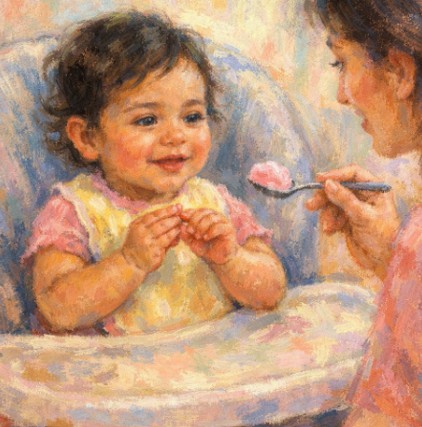
The more sign is made by bringing the fingertips and thumbs of both hands together and gently tapping them.
Many babies simplify this sign by tapping their fists together instead. That’s perfectly okay.
“Milk” — Baby ASL
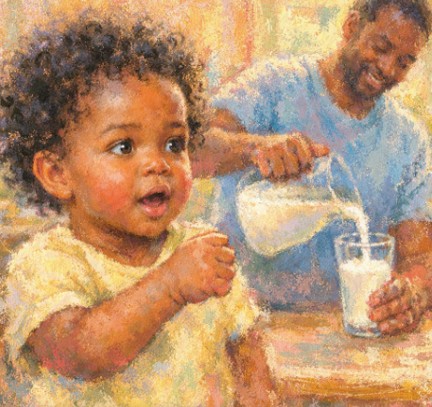
The milk sign is made by making a fist and repeatedly opening and closing it, almost like milking a cow.
This sign is especially useful during breastfeeding or bottle-feeding because babies experience this routine many times every day.
“All Done” — Baby ASL
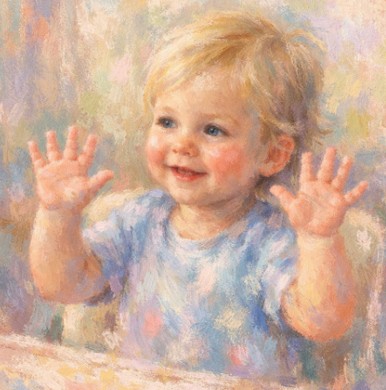
The all done sign is made by holding both palms toward yourself and gently flicking your hands outward twice, almost as if you are brushing the activity away.
This sign gives babies an easy way to tell you they’ve finished eating, playing, or completing an activity.
Don’t Worry About Doing It Perfectly
You can easily find videos on YouTube that demonstrate Baby ASL signs. But don’t worry about making every sign perfectly. Your baby isn’t taking an ASL class!
The important thing is that you use the same sign consistently with the same word.
Babies often simplify signs just as they simplify spoken words. The sign for more is made by tapping the fingertips and thumbs of both hands together — many babies simply tap their fists together instead. That’s perfectly okay. It’s no different than when children simplify spoken words: “water” becomes “wawa,” and “bottle” becomes “baba.” We still know exactly what they mean.
Communication matters far more than perfection.
Cheryl’s Tip: Don’t wait for your baby to copy the sign before using it. The real learning happens while your baby watches you use the sign over and over during everyday routines. Many babies understand a sign for weeks before they ever try to make it themselves.
One Thing You Can Do Today
If your baby is still breastfeeding or bottle-feeding, try teaching the milk sign.
Before feeding, ask, “Do you want milk?” and at the same time make the sign by opening and closing one hand as if milking a cow. Repeat the word milk every time you make the sign.
It may take many days — or even weeks — before your baby copies the sign. That’s okay. One day you’ll ask, “Do you want milk?” and your baby will sign it back to you. It’s a moment you’ll never forget.
If your baby is eating solid foods, try teaching the more sign. When they finish a bite and seem to be enjoying their meal, say, “Do you want more?” Make the sign for more, then pause and wait. Give your baby a chance to respond in their own way. With enough repetition, many babies begin using the sign to ask for another bite.
A Thought from Cheryl
Some parents feel nervous about using sign language because they’re afraid they aren’t doing it “right.”
Please don’t let that stop you.
You don’t have to be an expert. You don’t even have to use official signs if that feels overwhelming. Simple, consistent gestures that have meaning for you and your baby can be just as effective.
Remember, signing is only a bridge. The goal has always been the same — to help your baby communicate today while building the foundation for spoken language tomorrow.
The Bottom Line
Using Baby ASL doesn’t delay talking. It encourages communication.
Speech-language pathologists count consistent signs as words because they show that a child understands language and is intentionally communicating with others.
Whether your baby communicates with a sign, a gesture, a smile, or eventually a spoken word, every successful interaction helps build the foundation for language.
Whether you decide to use Baby ASL or not, remember that sign language is simply one tool for encouraging communication. Teaching signs like more, milk, and all done gives many babies an early way to express themselves while spoken language continues to develop.
And remember …
The goal is not to teach your baby ASL.
The goal is to teach your baby to communicate.