Quick Recommendations:
Best Overall: 🥇 Ms. Rachel
Best for Social Skills: 🥈 Daniel Tiger’s Neighborhood
Best Everyday Family Language: 🥉 Peppa Pig
Best for Imaginative Play: Bluey (especially for children over 3)
Use Sparingly: CoComelon, Blippi (for language development in two-year-olds)
Parents often ask me, “What are the best educational television shows for toddlers?” or “What are the best tv shows for two-year-olds?”
My first answer is always the same: children learn language by interacting with people—not screens. Talking, reading, singing, and playing with caring adults will always be the best way to help your child develop speech and language.
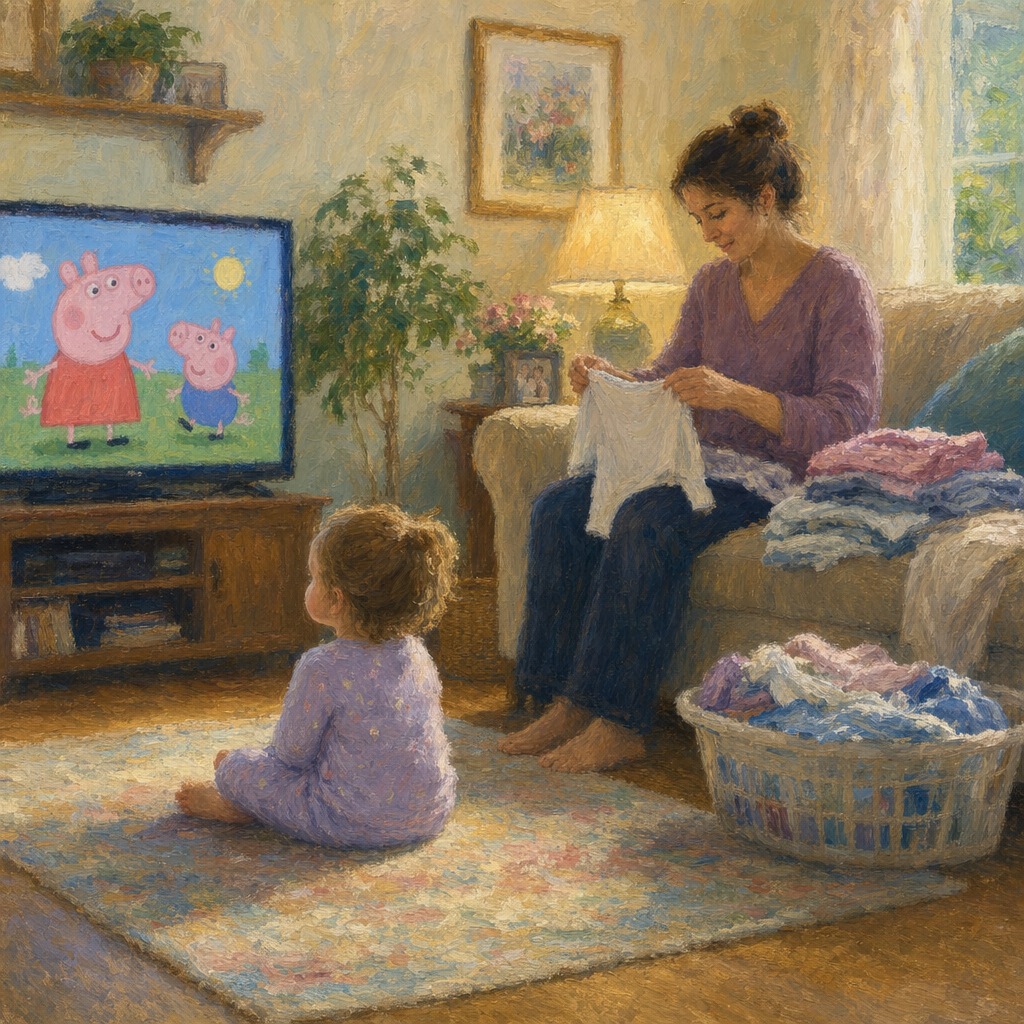
That said, I was a parent too. I know there are times when an older sibling is watching television or you simply need ten minutes to shower, fold laundry, or prepare supper. If your toddler is going to watch a show occasionally, why not choose one that offers something worthwhile?
With that question in mind, I watched ten of the most popular children’s programs that are either designed for toddlers or frequently watched by them. I looked at each show from the perspective of a typical 24-month-old.
How I Rated Each Show
I scored each program on four areas that I think matter most for toddlers.
- 1. Language Simplicity — Could the average two-year-old understand most of what is being said? Are important words repeated often?
- 2. Volume of Language — Is there plenty of talking, or are long periods filled with music, action, and sound effects with very little language?
- 3. Age-Appropriate Concepts — Would a two-year-old have enough background knowledge to understand what is happening, or are the ideas better suited to older preschoolers?
- 4. Engagement — Would the show naturally capture the attention of a typical toddler?
My Ratings
These ratings reflect my professional opinion as a Speech-Language Pathologist after viewing each program through the lens of language development for a typical two-year-old.
My Top Three Picks
1. Ms. Rachel
This probably won’t surprise many parents.
While adults sometimes find Ms. Rachel’s presentation repetitive, that’s exactly why it works so well for young children. She speaks slowly, repeats important words, uses expressive facial expressions, models gestures, and presents vocabulary in several different ways through singing, clapping, and play.
No television show teaches language the way real people do, but if I were choosing a program to reinforce early language, this would be my first choice.
2. Daniel Tiger’s Neighborhood
This was a pleasant surprise for me.
Before watching it closely, I wasn’t sure how appropriate it would be for very young children. I found the language simple, the pace comfortable, and the concepts highly relevant to toddlers. It also introduces important social and emotional ideas in ways that young children can begin to understand.
3. Peppa Pig
I expected Peppa Pig to rank much lower than it did.
Although the vocabulary occasionally stretches beyond what a two-year-old might use, the language is repeated frequently, and the stories move slowly enough for toddlers to follow. Everyday family situations make the concepts familiar and understandable.
The Shows I’d Be Least Likely to Choose
CoComelon
I’ve written about CoComelon before.
Children clearly enjoy it, and it certainly captures their attention. However, much of the program is driven by music, rapid scene changes, bright colours, and constant visual stimulation. There simply isn’t as much meaningful language for children to process.
I think of Ms. Rachel as a wonderful picture book being read by an enthusiastic teacher.
I think of CoComelon as an exciting amusement park ride.
One is designed primarily to teach. The other is designed primarily to entertain.
Many people have asked, “Does Cocomelon cause speech delay?” No, the show does not “cause” speech delay, however, children with language difficulties gravitate toward shows like this because they do not need to use language to engage with the lights, movement and colors.
Blippi
I had high hopes for Blippi because it features a real person interacting with the world.
Unfortunately, I found much of the language consisted of simply describing what viewers could already see. The educational opportunities often took a back seat to exaggerated actions and silliness. While many children enjoy Blippi, I don’t think it makes the best use of language-learning opportunities for two-year-olds.
Gabby’s Dollhouse
This show wasn’t bad—it just seemed better suited to slightly older children.
The imaginative storylines and fantasy elements are fun, but many of the concepts are likely beyond the understanding of a typical two-year-old. Preschoolers closer to four or five years of age may enjoy it much more.
One Thing You Can Do Today
The next time your child watches television, sit down and watch with them for a few minutes.
Ask yourself:
- Are they simply staring at the screen?
- Do they try to copy the actions?
- Do they repeat any words or songs afterward?
- Can they use something they learned later during play?
The best shows encourage children to participate—not just watch.
Thoughts from Cheryl
Screen time will never replace the value of reading books, playing together, or having conversations with your child. If you do choose to use television occasionally, be selective. A few thoughtful minutes with a high-quality program can reinforce language your child is already learning through everyday interactions.
The Bottom Line
Will five minutes of CoComelon harm your child?
Probably not.
But babyhood and toddlerhood are incredibly short periods of rapid brain development. Every minute your child spends talking, playing, reading, singing, and interacting with real people is an investment in their language and learning.
Think of screen time as the occasional dessert—not the main course.
Children can’t grow strong on sugar alone. They need the nourishing “meat and potatoes” of real communication with caring adults.