This article is part of a larger guide to choosing toys that support language. You can see the full list here.
One-year-olds are fascinating. They are watching everything, understanding far more than they can say, and starting to imitate sounds and actions. And this is exactly when toy choices start to matter — not because toys teach language, but because they create opportunities for interaction.
What a 1-Year-Old Needs From a Toy
At this age, I’m looking for toys that are simple, connect to daily routines, and invite back-and-forth play. If a toy can be used in many different ways, it’s a good sign.
My Favourite Toys for 1-Year-Olds
1. Board Books
Still one of the best language tools available. You don’t have to read the story. Just point, name, and react. That’s enough.
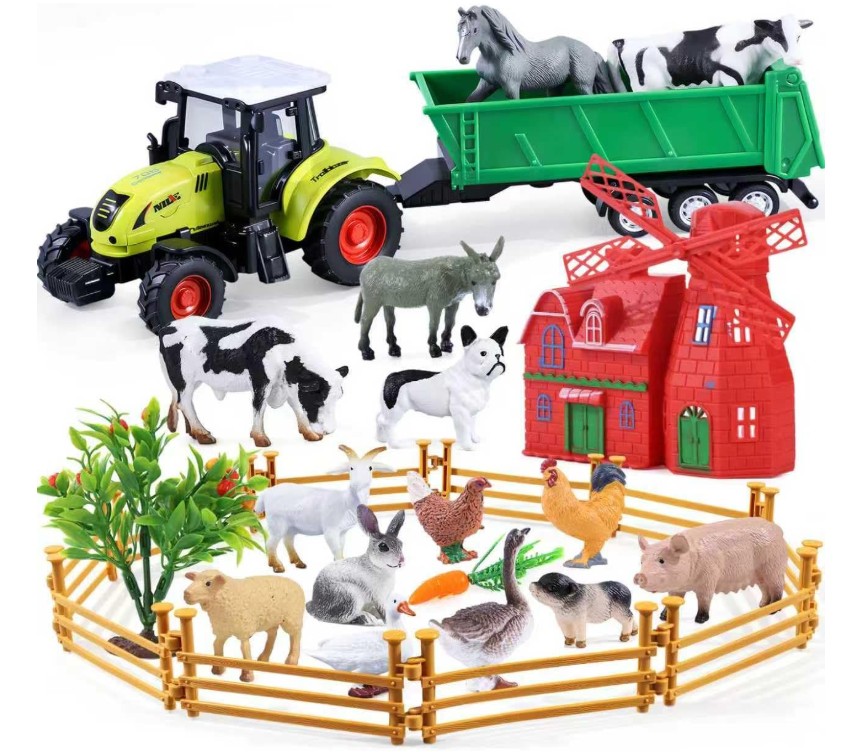
2. A Small Farm Animal Set
Perfect for sounds (“moo,” “baa,” “woof,” “meow”), early pretend play, and simple vocabulary. Animal sounds are often easier than real words — and that matters.
3. A Dump Truck or Simple Vehicle
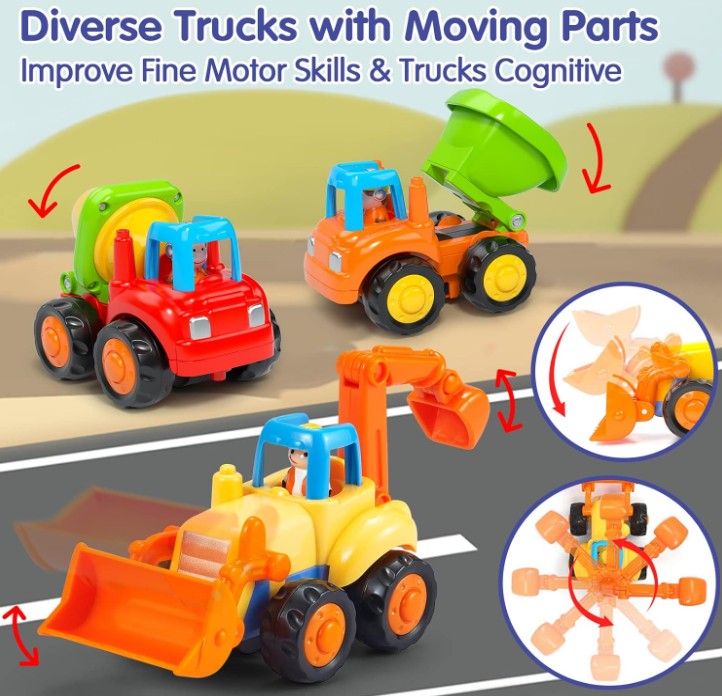
Great for “go,” “stop,” “uh-oh,” and “beep beep.” Movement naturally invites language.
4. Simple Play Food
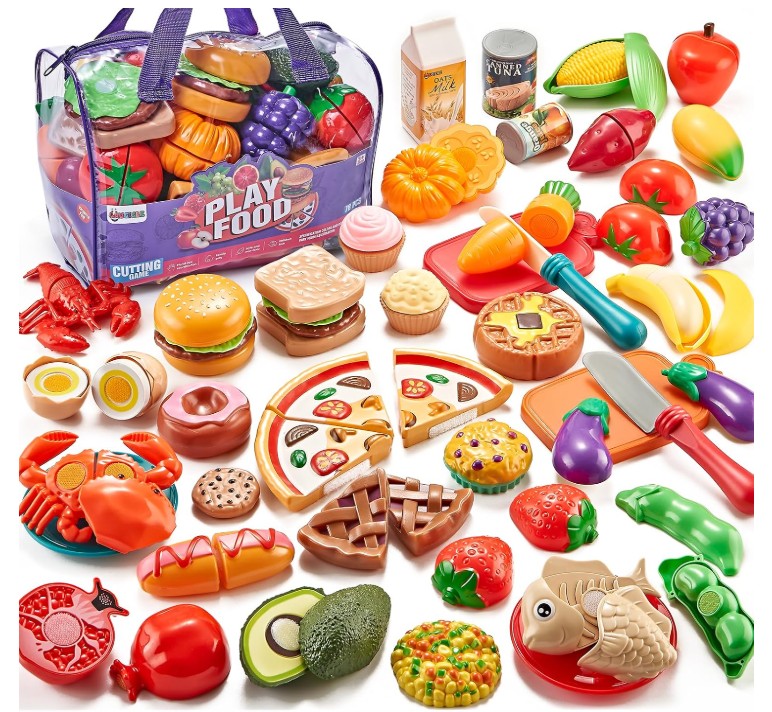
Encourages offering, requesting, and sharing — the foundations of communication.
5. Cups, Bowls, and Spoons
These are surprisingly powerful. They allow filling, dumping, feeding, and pretending. And every action creates something to talk about.
What I’d Skip at This Age
Electronic tablets, musical keyboards, and toys that do all the talking. These don’t create much interaction. (See my full breakdown of toys to avoid for language development for more on why.)
What Matters Most
At one year old, your child is not learning words from toys. They are learning from watching you, listening to you, and taking turns with you. The toy is just the setting.
One Simple Tip
Pick one toy. Sit on the floor. Follow what your child is doing and say a few simple words about it. Then pause.
That pause is where language begins.
The Bottom Line
The best toys for a one-year-old are simple, familiar, and interactive.
And the most important part of the toy…is you.