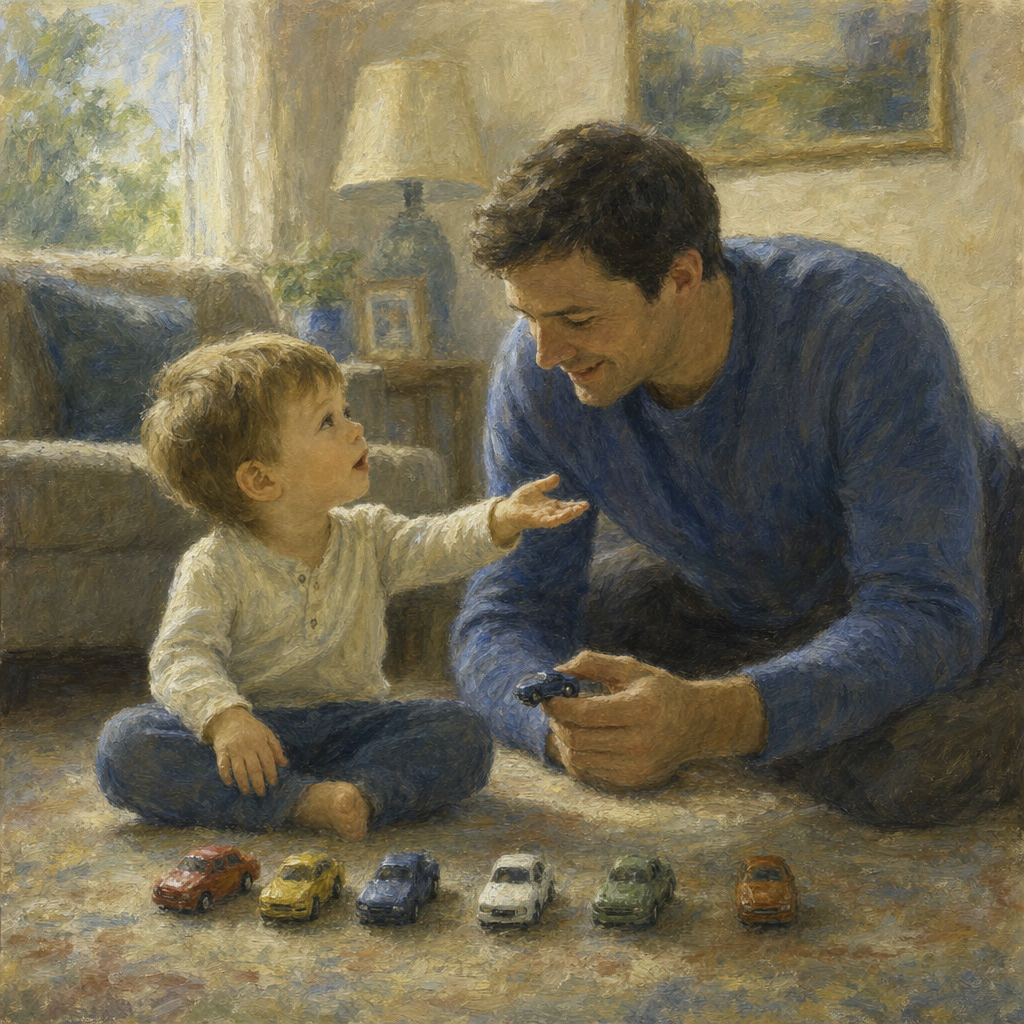
Babies and toddlers usually look at their parents and caregivers often. They look to familiar adults for reassurance and comfort, to understand why something unexpected happened, to ask for more, to show something, and to share moments of joy.
Sometimes children don’t look because they are deeply engaged in an activity, and that’s perfectly normal. However, if your child rarely looks at your face or makes eye contact, it may be something to pay closer attention to.
There has been increasing discussion about whether telling a child to “look at me” is appropriate. For some children, especially those who find eye contact uncomfortable or overwhelming, being forced to look can feel distressing. I agree — we should never force or command a child to make eye contact.
At the same time, looking at other people’s faces plays an important role in helping us understand the world and regulate our behavior.
Imagine a child in kindergarten when the fire alarm goes off. The child will quickly look at the teacher and classmates. Are they calm? Are they scared? If everyone looks calm and is lining up to go outside, the child feels reassured and can stay calm too.
Adults do this as well. If someone says something unusual in a meeting, we often glance at others to decide how to respond — should we laugh, be surprised, or simply continue as if nothing happened?
Looking helps us understand what others are thinking and respond appropriately.
The good news is that children can learn to look at faces naturally, through fun, shared activities, without any pressure.
Start With Gestures First
Before focusing on looking, it helps if your child is already able to request using gestures — for example, reaching, pointing, or pulling you toward something. If you’d like help building those early communication skills first, read more here: Social skills games for babies and toddlers.
Once your child is consistently requesting using gestures, you can gently encourage looking by pausing and waiting.
How to Encourage Looking Naturally
For example, if you are playing a fun “running game” and your child pulls your hand to ask for more, simply pause. Look down at your child and wait quietly. As soon as your child glances up at your face — even for a moment — start the game again right away.
No words are needed. In fact, it’s often better not to say anything. The goal is for the looking to happen naturally, not because of a prompt.
As your child becomes more comfortable, you can wait just a little longer — but only if your child is staying relaxed and happy. Then smile and continue the game. Keep it light, playful, and fun.
One Thing You Can Do Today
Think about the games and activities your child already loves. Do they enjoy blocks, cars, swinging, or bubbles?
The key is to gently become part of the activity so there are natural chances to connect. For example:
- Hold onto the cars and hand them to your child one at a time to roll down a ramp
- Pause for a moment before giving another push on the swing
- Wait a beat before blowing more bubbles
These small pauses give your child a natural reason to look at you.
A Note from Cheryl
If your child becomes upset when you pause, that’s a sign the wait was a little too long or too hard right now — not that they’re being difficult. Your child is still learning a new way to communicate. Frustration is normal.
If you can, put yourself between the thing your child wants and your child’s face so that looking at you is the natural response. If they do not look at you, accept the request they already made — like a reach, a pull, or a gesture — and keep the game going. Next time, try a much shorter pause, just a beat or two, so they can succeed easily.
Try to avoid unintentionally reinforcing screaming by giving your child what they want immediately after they scream. This can be tricky if the scream comes with the eye contact. Sometimes you may need to leave the activity and pick it up later when your child is less upset.
Remember, the goal is never to make your child look at you. It’s to make looking at you worth it: fun, rewarding, and something they choose to do.
The Bottom Line
Looking at others helps children (and adults) understand social situations, read important cues, and respond appropriately. When it’s taught in a playful, natural way, looking at faces becomes a meaningful and comfortable part of communication.