Many parents tell me, “My toddler just doesn’t listen!”
The truth is that listening isn’t something children automatically know how to do. Listening is a skill, and like every other skill, it develops with practice. The best way to teach listening isn’t through lectures or repeated reminders — it’s through fun, playful activities that help your child discover that listening gives them important information.
Start with Simple Gestures
You can begin teaching listening skills when your baby is about 8 to 10 months old by asking them to imitate simple actions. Try things like:
- Wave bye-bye.
- Give a high five.
- Blow a kiss.
- Put your hands up for “So Big!”
- Touch your nose, tummy, ears, or toes.
When your child copies you, celebrate!
“You found your nose! Yay! Great listening!”
If they don’t imitate right away, that’s okay. Gently help them.
“Let’s wave bye to Grandma.” (Take their hand and help them wave.) Then celebrate their success.
Play the “Find It” Game
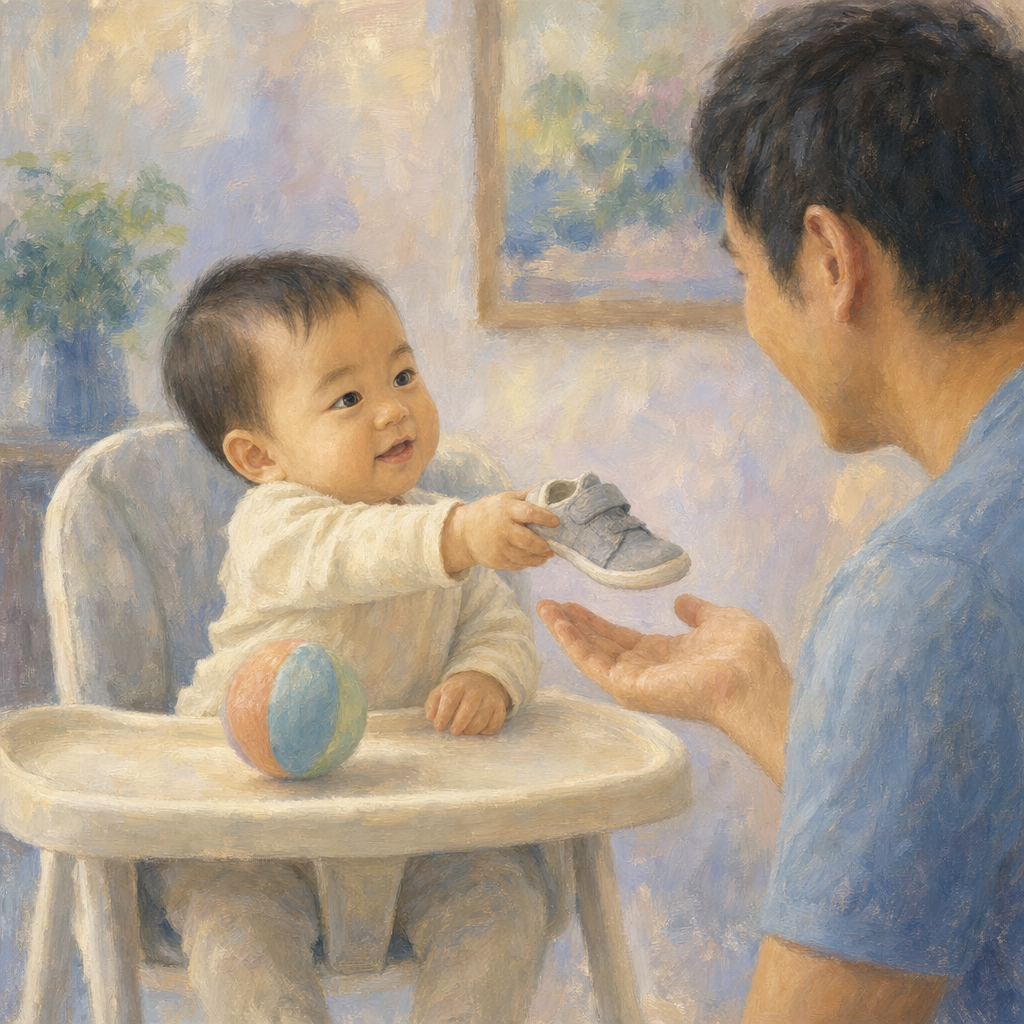
Once your child understands a few familiar words, place two everyday objects on their highchair tray or the floor. For example:
- spoon and cup
- shoe and ball
- block and car
Ask, “Can you give me the shoe?”
If they choose correctly, celebrate! “Yes! You found the shoe! Great listening!”
If they choose the wrong object, don’t treat it as a failure. Instead say, “Oops! That’s the ball. Let’s find the shoe.” Point to the correct object or gently help them find it, then celebrate when they succeed. Mistakes are part of learning.
Increase the Challenge
As your child becomes more successful, gradually make the game a little harder. Instead of two objects, try three or four. If your toddler is walking, ask them to find objects around the room:
“Where’s Puppy? Can you find Puppy?”
“Can you bring me your hat?”
These games build vocabulary while strengthening listening skills at the same time.
Move to Pictures
After your child can easily find real objects, begin asking them to point to pictures in books. Pictures are a little more abstract than real objects, making this an excellent next step toward later learning at preschool and school.
Practice Everyday Directions
Children first learn to follow directions that happen naturally during everyday routines. Examples include:
- “Throw your diaper in the garbage.”
- “Go get your boots.”
- “Bring me your cup.”
These are called in-context directions because they make sense in the situation. Once your child can follow those easily, make listening even more fun by giving silly directions:
- “Put your boots in the bathtub.”
- “Put your hat on your foot.”
- “Give Daddy your sock.”
Children love silly games, and these activities help them listen carefully instead of simply guessing what usually comes next. By about 18 to 24 months, many toddlers enjoy this kind of game. Following silly directions shows they’re listening to the actual words — not just relying on routine.
One Thing You Can Do Today
8 to 12 Months — Pick one simple gesture and practise it every day this week: waving bye-bye is a great start. Say the words, do the action yourself, then gently help your baby copy you. Celebrate every attempt, even partial ones. Repetition and joy are what build the habit of listening.
12 to 18 Months — Try the “Find It” game at snack time. Put a spoon and a cup on the highchair tray and ask your child to give you one of them. Keep it light — if they get it wrong, just point and try again. Two minutes of this a day adds up quickly.
18 to 24 Months — Introduce one silly direction today and see what happens. “Can you put your shoe on your head?” The laughter it creates is the point — a child who is laughing is a child who is listening.
A Thought from Cheryl
After more than 40 years as a speech-language pathologist, I’ve learned that listening is one of the most important skills we can teach young children.
Listening helps keep children safe, makes daily routines easier, supports language development, and lays the foundation for learning in school. Children who can listen to stories, follow directions, and understand what they hear are better prepared for reading and classroom learning later on.
The wonderful part is that teaching listening only takes a few playful minutes each day. You don’t need special equipment or a curriculum. You just need a willing toddler, a sense of humour, and the knowledge that every small game you play together is building something important.
The Bottom Line
Great listeners aren’t born — they’re taught. By turning listening into a game and celebrating your child’s successes, you’re building a skill that will benefit them for years to come.
Start small, keep it playful, and let your child’s delight be your guide.
Watch this short video for more listening games you can try today.