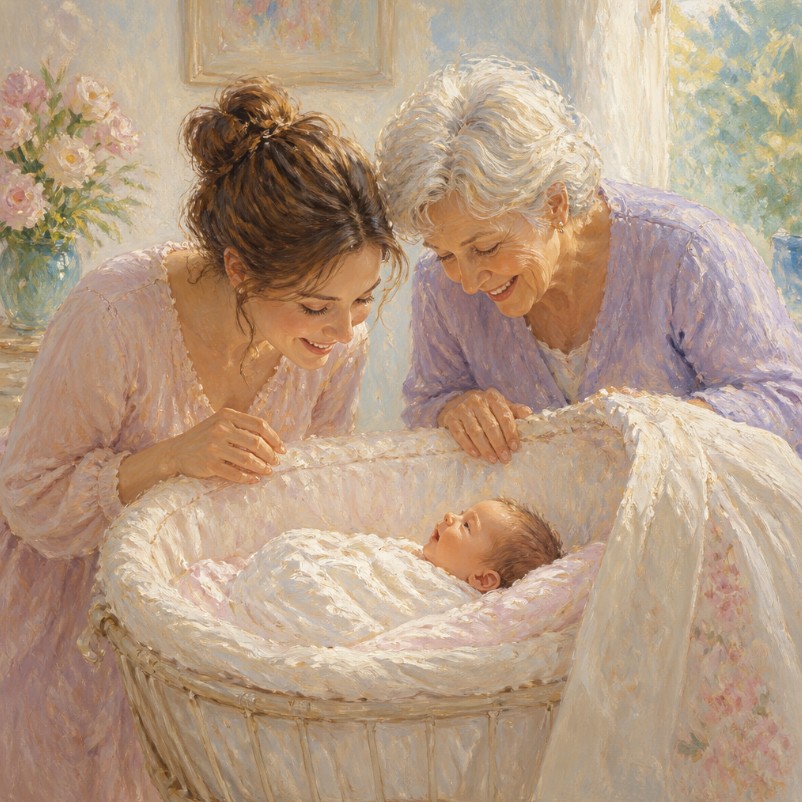
If your baby is under 18 months of age, I recommend talking to your infant using “baby talk”—that warm, expressive, slightly higher-pitched, slower style of speech that adults naturally use with babies.
While you may find some grandparents, aunts and uncles “poo-pooing” this practice, it actually has a name. It is called parentese, and babies around the world seem to love it.
What Is Parentese?
Parentese is a special way of talking to babies using a warm, expressive voice, a slower pace, exaggerated facial expressions and a slightly higher, more melodic pitch.
You may have heard someone say, “I never used baby talk with my children. I talked to them like adults from the very beginning!”
But there is an important difference between parentese and nonsense baby talk.
Parentese does not mean using made-up words, deliberately mispronouncing words like “Time to put on your ‘pantsy wantsies’” or saying “goo-goo, gah-gah.” Instead, you use real words and sentences—you just say them in a slower, warmer, more expressive and melodic way.
For example, instead of saying:
“Time to wash your hair.”
You might say:
“Heeeeeere comes the waaaater! Ohhhh, you don’t like that! That’s okay. Hair is clean now!”
Same real words. Same message. Just delivered in a way that is much more likely to capture a baby’s attention.
Why Do Babies Pay Attention to Baby Talk?
Virtually all languages around the world have some form of parentese. Those elongated vowels, exaggerated facial expressions and sing-song changes in pitch act as a kind of social hook that helps capture a baby’s attention.
Babies are naturally drawn to the slower pace, stretched-out vowel sounds and melodic pitch of parentese. It can make speech easier to notice and help babies tune in to the person who is talking.
And when a baby is looking, listening and engaged, that is where early communication begins.
Research has shown that even newborn babies respond differently to this special style of speech. The cadence of parentese is something babies naturally tune into, often paying more attention to it than to regular adult conversation.
So, if you want to get your newborn’s attention, try baby talk!
Does Baby Talk Help Babies Learn to Talk?
Does baby talk help language development? Yes, it can—but not because a high-pitched voice is some sort of magic trick that will suddenly make your baby start talking.
The real benefit is that parentese helps create enjoyable moments of connection between you and your baby. When babies are interested and engaged, they have opportunities to listen to real words, watch your face, notice your expressions and begin taking turns with sounds, smiles and movements.
These early back-and-forth interactions are the beginnings of conversation.
Your baby may coo. You respond. Your baby smiles. You smile back. Your baby kicks excitedly. You say, “Ohhhh! You like that!”
Long before babies say their first words, they are learning that communication goes both ways.
What Does Parentese Sound Like?
You don’t need special toys, flashcards or a structured language lesson to use parentese. It fits naturally into the little moments already happening throughout your baby’s day.
Imagine the following scenarios with a parent or caregiver speaking in a warm, soft, sing-songy tone:
Baby—crying
“Oh nooooo! Mommy’s here! Theeeeere you go! You’re okaaaay!”
Baby—in the tub
“Heeeeeere comes the waaaater! Ohhhh, you don’t like that! That’s okay. Hair is clean now.”
Baby—crying in the car
“Ohhhh deaaaar! You don’t like that car seat. It’s okayyyyy. We are almost home.”
Baby—getting dressed
“Heeere we go! Ooooover your head. Peek! I seeeeee youuuuu! Okay now, aaaarrrmm iiiinnn!”
Baby—sitting on a parent’s lap and beginning to fidget
“Theeeee Itsy Bitsy Spider went up the waaaater spout. Dooooown came the rain and washed the spider OUT!”
This is how to talk to a baby using parentese. You are not simplifying your speech to the point of nonsense. You are using real words and phrases while making your voice more interesting and easier for your baby to tune into.
Is Baby Talk Good for Babies?
Baby talk can cause some conflict in families. Some parents and grandparents do it naturally as a matter of course, while others frown upon “baby talk” and are adamant:
“I talked to my children like adults from the very beginning!”
I’m here as a retired Speech-Language Pathologist to tell you that this kind of baby talk—parentese—is something newborns and infants love and can benefit from.
You do not need to use it all day long, and you certainly don’t need to turn every diaper change or feeding into a language lesson. But those warm, expressive moments can help your baby look, listen and engage with you.
And that is good for early communication.
When Should You Stop Using Baby Talk?
As your baby grows and begins understanding and using more words, your way of talking will naturally change too. You don’t need to suddenly stop using a warm, expressive voice on your baby’s first birthday.
Instead, let your speech gradually become more conversational while continuing to use clear, simple language that matches your child’s stage of development.
The goal is not to keep talking to a growing child as though they are a newborn. It is simply to adjust naturally as your child’s communication skills grow.
One Thing You Can Do Today
For some people, “baby talk” or parentese does not come naturally. You may feel silly doing it.
That’s okay. Try it when no one else is around. (And perhaps when the baby monitor is turned off!)
If you still can’t bring yourself to speak in soft, lilting tones, try nursery rhymes, finger plays and simple social games. Patty-cake, Round and Round the Garden and Peek-a-Boo all naturally lend themselves to the rhythm, repetition and warm, expressive voice that babies love.
You don’t need to perform. You don’t need to be entertaining every minute. Just try one or two playful moments and see how your baby responds.
A Thought from Cheryl
One thing to remember is to match the mood of your baby—read the room, as it were!
If your baby is just drifting off to sleep, this is not the time for an enthusiastic game of Patty-cake.
Similarly, if your baby is happily engaged in tummy time with toys on the floor, try to match the tone:
“Ohhhhh! You see the blooooock! Can—you—reeeeeach it?”
And, as ever, your baby needs downtime. Do not feel that you need to fill their entire day with talking, singing and stimulation. Babies need quiet moments too.
A few precious moments of warm, connected conversation each day will do just fine.
The Bottom Line
So, is baby talk good for babies?
Yes! The warm, expressive, melodic style of baby talk known as parentese can help capture your baby’s attention and encourage those early moments of looking, listening and back-and-forth communication—and actually grow language and vocabulary.
Use real words. Use real sentences. Slow down. Stretch out some of those sounds. Let your face and voice show your excitement. And most importantly, watch your baby and respond to what interests them.
The goal isn’t to perform, entertain or talk all day long. It’s simply to enjoy a few warm, connected moments when your baby is ready to look and listen.
And if you still have in-laws or babysitters who try to shame you for using baby talk, share this information with them.
If that doesn’t work, ignore them. You are doing what is best for your baby!