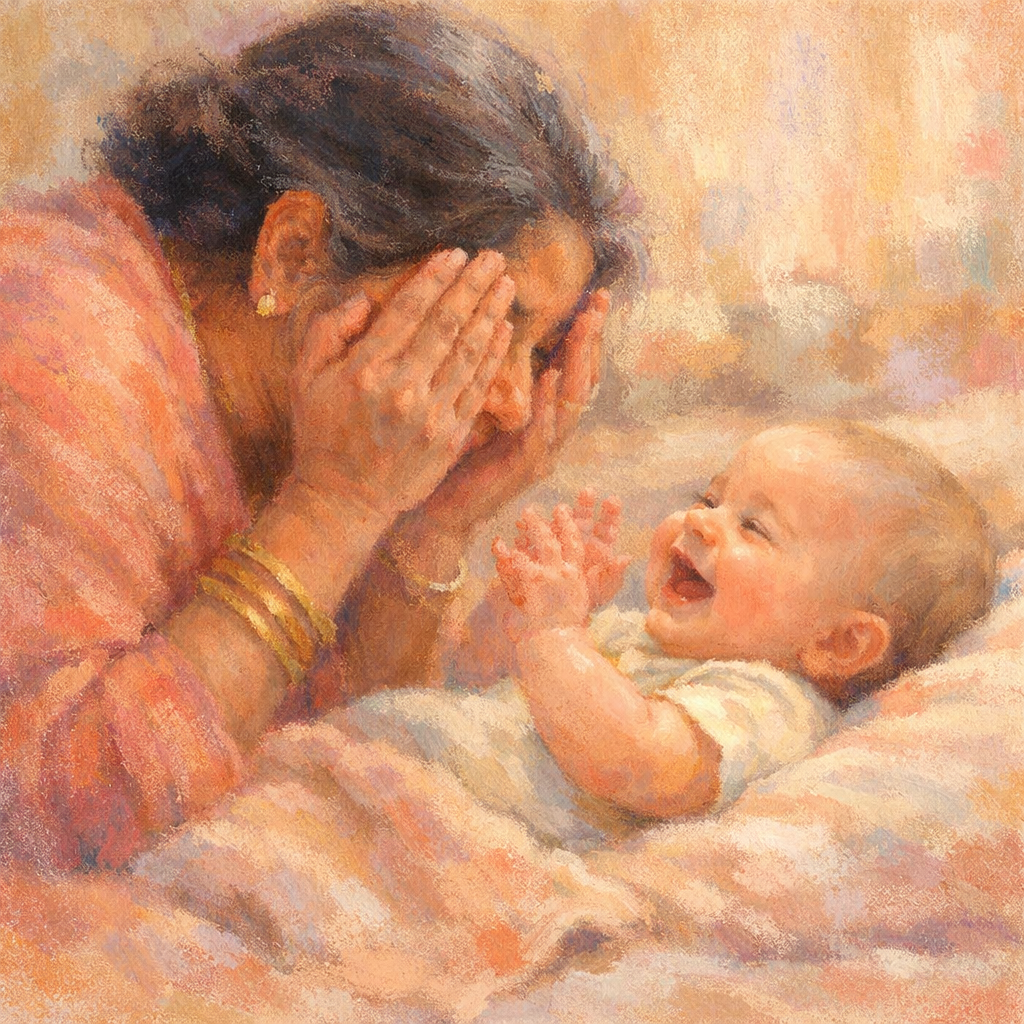
Few moments in early parenthood are as unforgettable as hearing your baby laugh for the first time.
After those first precious social smiles, parents naturally begin wondering, “When will my baby laugh?”
Most babies begin chuckling and giggling somewhere between 3 and 4 months, with full belly laughs becoming common between 4 and 6 months.
As a speech-language pathologist for over 40 years, I love this milestone—not just because it’s adorable, but because laughter tells us something important. Your baby is becoming a social communicator.
In just a few short months your baby has gone from crying, to smiling, to cooing, and now laughing. Each milestone builds on the one before it, bringing your baby one step closer to real conversation.
When Do Babies Start Laughing? A Month-by-Month Timeline
| Age | What You’ll Likely See |
|---|---|
| 6–8 weeks | Social smiling—the beautiful milestone that comes before laughter. |
| 3–4 months | First chuckles and giggles, often in response to your voice, funny faces, peekaboo, or gentle tickles. |
| 4–6 months | Full belly laughs become much more common. Babies begin laughing at anticipation games like peekaboo and “I’m gonna get you!” |
| 6–12 months | Babies laugh at surprises, silliness, familiar routines, pets, siblings, and sometimes even their own funny discoveries! |
Remember, these ages are averages. Babies don’t read milestone charts, and they all develop at their own pace.
Why Does Laughter Matter?
It’s easy to think laughter is simply cute—and it certainly is—but it’s much more than that.
Unlike crying, which tells us your baby needs something, laughter tells us your baby wants to share an enjoyable experience with you.
Every time you make your baby laugh, something wonderful happens.
- Your baby looks at you.
- They wait for you to do it again.
- You repeat the game.
- They laugh again.
Congratulations—you’ve just had a tiny conversation.
Long before children use words, they’re already learning the rhythm of communication through these joyful back-and-forth interactions.
Laughter strengthens connection, builds attention, encourages turn-taking, and lays another brick in the foundation for language development.
Reflexive vs. Real Laughter — Why Do Babies Laugh in Their Sleep?
Parents are often surprised to hear their baby giggle while sleeping.
Does this mean they’re dreaming about something funny?
The truth is that experts aren’t entirely sure. Since we don’t know exactly when babies begin dreaming, most researchers believe laughter during sleep is usually a reflex rather than a response to a funny dream.
Real laughter—the kind parents eagerly wait for—usually happens during enjoyable social interactions with another person.
How to Make Your Baby Laugh (While Building Language)
Here’s something I’ve learned after working with hundreds of babies over the years:
What makes one baby laugh may make the next baby cry.
Babies, just like adults, have their own personalities and sense of humor. Don’t worry if one activity doesn’t work. Try another. Before long you’ll discover what makes your own little comedian giggle.
Anticipation Games
Babies love knowing something exciting is about to happen.
The secret is to repeat the game a few times, so your baby knows what’s coming. Then…slow it down. Pause before the surprise. That moment of anticipation is often what brings on the giggles.
Peekaboo
Cover your face with your hands, a blanket, or a washcloth.
“Where’s Mommy?”
Pause…
Then dramatically reveal yourself. “Peekaboo!”
“I’m Gonna Get You!”
Slowly creep your fingers up your baby’s legs or tummy.
“I’m…gonna…get…you!”
Then finish with a gentle tickle.
So Big!
“How big is baby?”
Pause.
Then gently lift your baby’s arms overhead. “Soooo big!”
Even if this doesn’t produce laughter every time, babies quickly begin anticipating what comes next, making this another wonderful turn-taking activity.
Funny Faces and Silly Sounds
Babies often laugh when something is just a little unexpected. Try:
- blowing gentle raspberries on their tummy (if they enjoy it)
- talking in a silly cartoon voice
- pretending to be Scooby Doo or a growly puppy
- making exaggerated happy faces with puffed cheeks, giant smiles, or funny eyes
Stay away from angry or frightening expressions. While a few babies may laugh, most find them upsetting.
Gentle Movement Games
Simple physical games are often favorites. Try:
- gentle tickles
- “Bounce, bounce, bounce…JUMP!” while bouncing your baby on your lap
- “This Little Piggy”
- “Round and Round the Garden”
These little finger plays combine rhythm, anticipation, language, and touch—all wonderful ingredients for communication.
Everyday Surprises
Sometimes the funniest moments aren’t planned at all.
Your baby may burst into laughter watching the family dog lick someone’s face, seeing an older sibling be silly, or watching you accidentally drop a stuffed animal with an exaggerated “Uh-oh!”
The important thing isn’t finding the “perfect” joke.
It’s sharing the moment together.
Keep your baby’s mood in mind. Hungry, tired, or overstimulated babies rarely feel like laughing. Save your comedy routine for those happy moments when your baby is awake, alert, and content.
What If My Baby Isn’t Laughing Yet?
Babies don’t read milestone charts—they develop at their own pace.
Some babies have big, expressive personalities and laugh early. Others are quieter observers who smile broadly long before they become gigglers.
Rather than focusing on one milestone, look at the whole picture.
- Is your baby smiling?
- Making eye contact?
- Responding to your voice?
- Beginning to coo and interact?
If the answer is yes, those are all encouraging signs.
If your baby reaches 5 or 6 months without laughing, especially if they also have limited eye contact, aren’t smiling socially, don’t respond to your voice, or seem to be losing communication skills they previously had, it’s worth mentioning your concerns to your doctor or health-care provider.
Sometimes children simply develop on the later end of the typical range.
Occasionally, delayed laughter is one clue that a child would benefit from a closer look.
Frequently Asked Questions
When do babies laugh for the first time?
Most babies begin laughing somewhere between 3 and 4 months, although the first laughs are usually soft chuckles or giggles rather than full belly laughs.
What’s the difference between giggling and laughing?
Those first little chuckles and giggles usually appear first. Big, contagious belly laughs often become common between 4 and 6 months.
How can I make my baby laugh?
Babies often laugh at anticipation games like peekaboo, funny faces, silly voices, gentle tickles, bouncing games, and playful surprises.
Why do babies laugh in their sleep?
Experts aren’t completely sure, but it’s generally believed that laughing during sleep is usually a reflex rather than evidence that babies are dreaming.
When should I worry if my baby isn’t laughing?
If your baby isn’t laughing by around 5–6 months, especially if they also aren’t smiling, making eye contact, cooing, or responding to people, discuss your concerns with your health-care provider.
One Thing You Can Do Today
Choose just one anticipation game today.
Play peekaboo, “Round and Round the Garden,” or “I’m Gonna Get You” three or four times in a row.
Don’t rush.
Pause just before the surprise.
That tiny moment of waiting is often what makes babies giggle—and it’s also teaching them one of the most important skills they’ll ever learn: the back-and-forth rhythm of communication.
A Thought from Cheryl
The internet is full of videos of laughing babies because, honestly, who can resist watching them?
But every one of those little giggles represents something much bigger than a funny moment.
Your baby is learning that spending time with another person is fun. They’re learning to watch your face, anticipate what’s coming next, and share an experience with someone they love.
Those joyful little moments may only last a few seconds, but they’re helping build the social foundation that one day will support conversations, friendships, and relationships.
So, if you manage to make your baby laugh today, enjoy every second of it.
You’re not just making memories.
You’re helping your baby become a communicator.
The Bottom Line
Most babies begin laughing between 3 and 4 months, with full belly laughs becoming common between 4 and 6 months.
You can encourage laughter by playing anticipation games, using silly voices, making funny faces, and sharing playful moments together.
Think of laughter the same way you think about crawling before walking. Crawling isn’t the final goal—it’s one of the important steps that helps children get there.
Laughter is similar.
It isn’t conversation, but it’s one of the important building blocks on the road to communication.
Enjoy every giggle.
It’s one of childhood’s sweetest milestones—and one of the first signs that your little conversational partner is beginning to emerge.