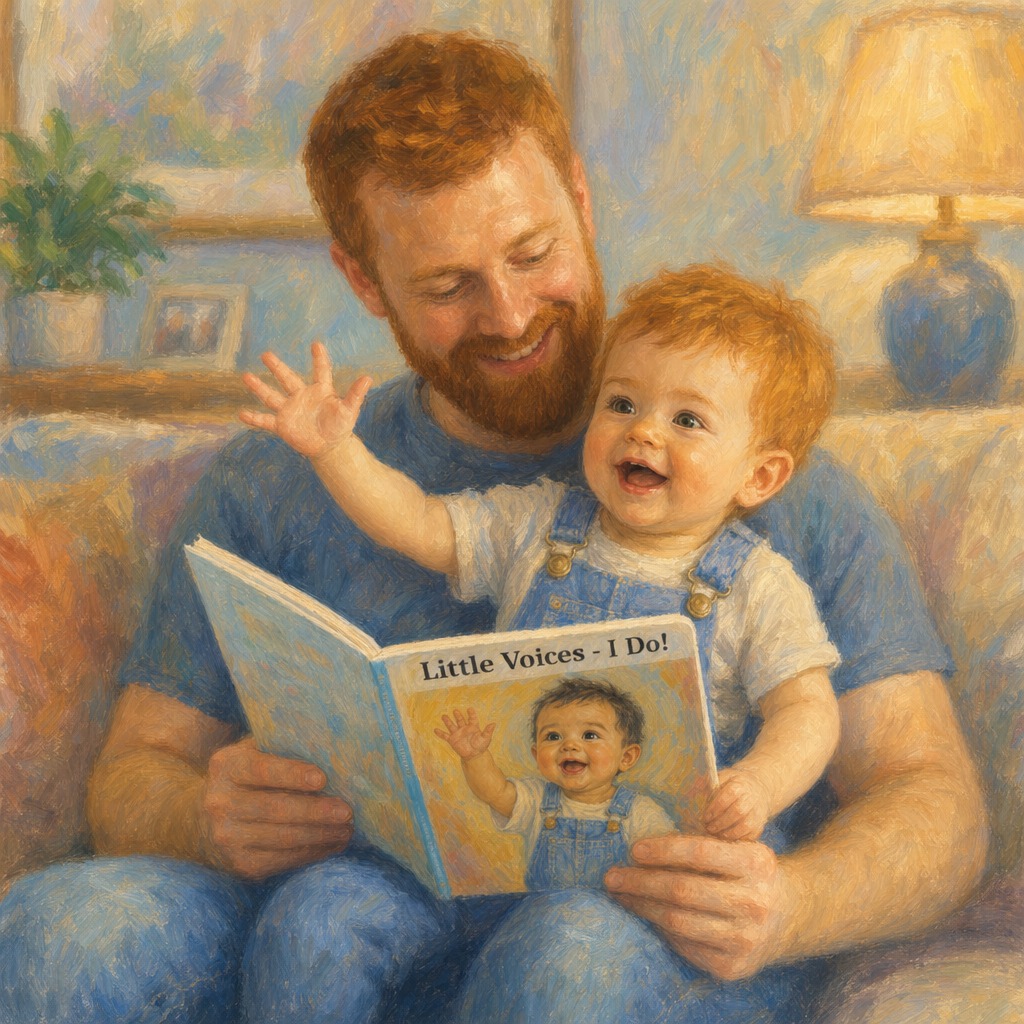
If you spent your baby’s first year trying to read books together, you may remember how challenging it could be. Babies have short attention spans. They throw books, chew on them, and rarely sit still long enough to finish a page — let alone a story.
But if you stuck with it, something wonderful starts to happen.
As your baby becomes a toddler, they begin to understand the joy of books. They can sit a little longer, anticipate what comes next, and even start to participate. All that early effort begins to pay off.
These are my go-to book recommendations for children roughly 12–36 months — whether you’re picking books for a one-year-old just starting to toddle, a two-year-old in full sentence-building mode, or a three-year-old ready for real stories. At this stage, I like to include a mix of:
- Activity (participation) books
- Rhyming books
- Simple story books
But across all categories, I focus on one key idea: consistency and repetition. Toddlers learn best when they hear the same words and patterns again and again.
If you’re just starting your home library, check out my Best Baby Books guide for the newborn-to-one-year picks that pair well with these.
At a Glance: My Top Picks for the Best Books for Toddlers
| Book | Type | Why It’s Great |
|---|---|---|
| All Fall Down | Activity | Movement and interaction |
| Where’s Spot? | Activity | Lift-the-flap engagement |
| Little Voices, I Do! | Activity | Encourages participation and early grammar |
| Moo Baa La La La | Rhyming | Fun sound play |
| Llama Llama Red Pajama | Rhyming | Rhythm + emotional connection |
| Are You My Mommy? | Story | Repetition and predictability |
| Good Night, Little One | Story | Calm bedtime routine |
| Good Dog, Carl | Story | Builds storytelling skills |
| Go, Trains, Go! | Interest-based | Engages busy toddlers |
| My First 100 Words | Reference | Builds vocabulary and communication |
Best Interactive & Activity Books for Toddlers
All Fall Down by Helen Oxenbury · Where’s Spot? by Eric Hill · Little Voices, I Do! by Cheryl Turner
These books invite your child to do something, not just listen — many of them come as sturdy board books, which is perfect for toddlers who are still a little rough with pages.
- All Fall Down is perfect for busy toddlers. At the end, you and your child can fall down together with the characters — great for children who don’t want to sit still.
- Where’s Spot? is the lift-the-flap book that keeps toddlers coming back — they get to lift the flaps and discover what’s hiding underneath. Try pausing before lifting the flap and letting your child guess.
- Little Voices, I Do! encourages participation by letting children respond to questions. Even if your child isn’t talking yet, they can raise their arms for “I do!” — and as a bonus, it reinforces more mature grammar.
Best Rhyming Books for Toddlers
Moo Baa La La La by Sandra Boynton · Llama Llama Red Pajama by Anna Dewdney
Rhyming is a powerful early language skill. It helps children hear and play with sounds — an important foundation for learning to read.
- Sandra Boynton’s books are silly, rhythmic, and highly engaging for young toddlers.
- Llama Llama Red Pajama adds a simple story to the rhythm. It captures common bedtime worries and reassures children in a gentle, predictable way.
Try this: pause before the last word in a rhyme and let your child fill it in.
Best Story Books for Toddlers
Are You My Mommy? by Mary Murphy · Good Night, Little One by Susan Larkin · Good Dog, Carl by Alexandra Day
At the toddler stage, children are ready for simple stories with repetition and clear patterns.
- Are You My Mommy? uses repetition and humor as a baby bird searches for its mother. After a few readings, your child will begin to anticipate and join in.
- Good Night, Little One is a calm bedtime story that mirrors familiar routines — a good one to add to a bedtime books for toddlers rotation.
- Good Dog, Carl is a wordless picture book, which makes it perfect for building storytelling skills. You can describe what’s happening, ask questions, and let your child help “tell” the story themselves.
Books for Busy Toddlers
Go, Trains, Go! by Addie Boswell
Some toddlers are constantly on the move and resist sitting still — even for a short story. That’s okay.
Books about vehicles, dinosaurs, animals, or anything that “goes” can help capture their attention. These interest-based books act as a bridge, helping busy children engage with books in a way that feels natural to them.
You can even pair the book with real toys — reading about trains while playing with a toy train adds another layer of learning and engagement.
A Different Kind of Book (But Very Useful)
My First 100 Words by Wonder House Books
This might seem like an unusual recommendation, but it’s one of the most practical tools you can have.
Toddlers often know what they want but can’t say it clearly. A picture-based word book gives them a way to show you what they mean.
If you regularly look through this book together, your child can begin to use it as a communication tool — bringing it to you and pointing when they can’t find the words.
One Thing You Can Do Today
Follow your child’s lead.
Toddlers have very little control over their day. Letting them choose the book gives them a sense of ownership. And if they want to read the same book over and over — that’s not a problem.
Repetition helps them:
- Learn new words
- Understand story structure
- Predict what comes next
And toddlers love knowing what’s coming next.
A Word from Cheryl
It’s perfectly normal for your toddler to want the same book again and again — but it’s also important to introduce new ones.
One simple strategy is a “your choice, my choice” routine:
- Your child chooses one book
- You choose one book
Another option is to have different family members introduce new books. Sometimes a new voice makes a familiar activity feel fresh.
The Bottom Line
The specific books you choose matter — but not as much as the experience you create together.
When you read with your toddler, you’re not just passing time. You are:
- Building vocabulary
- Strengthening attention
- Creating connection
- Laying the foundation for future learning
Most importantly, you are building the language skills your child will use for the rest of their life.