What We've Forgotten About Early Learning
2026-06-25
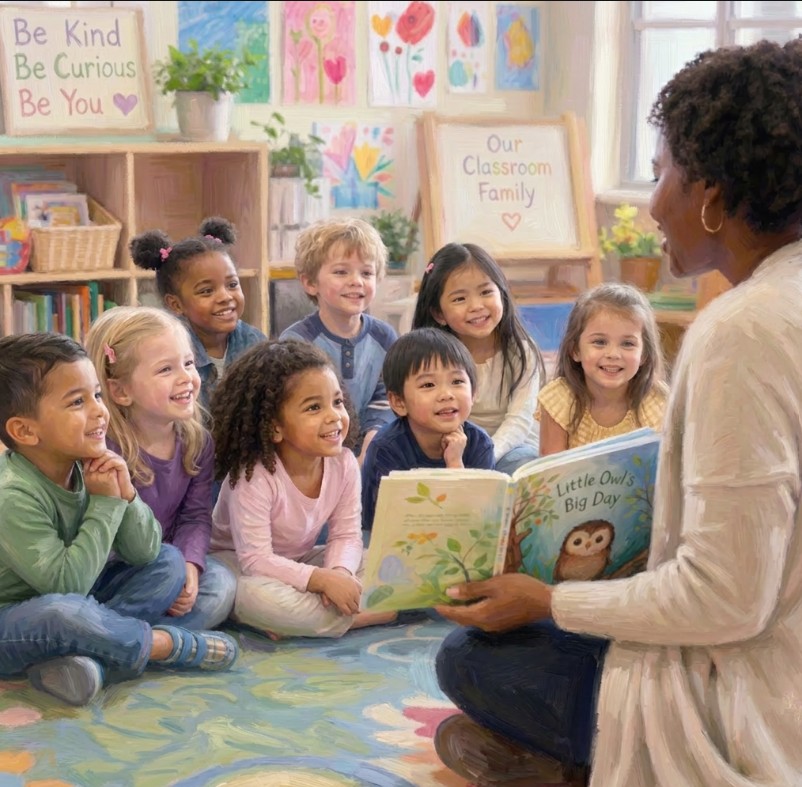
Why language, play, and relationships matter more than rushing young children into academics.
After more than 40 years as a speech-language pathologist, I've had the privilege of working with thousands of children, hundreds of families, and many dedicated teachers and early childhood educators. Along the way, I've learned a great deal—not just about how children learn, but about what they need most in order to thrive.
Over the years, I've noticed two trends that I believe have gradually pulled us away from what young children really need. Both come from a genuine desire to help children succeed, but neither gives children the strongest foundation for later learning.
One asks too much of young children.
The other asks too little.
The irony is that both can leave children less prepared for school.
When Preschool Starts Looking Too Much Like Grade One
Walk into some preschool classrooms today and you'll see three- and four-year-olds tracing letters, memorizing the alphabet, counting objects, identifying colours and shapes, or completing worksheets.
Many adults are delighted when a three-year-old can recite the alphabet. It's easy to understand why—it feels like they're getting a head start.
But I often find myself asking a different question.
Is that really the most important thing a three-year-old could be learning?
I don't believe it is.
Young children learn best through movement, conversation, stories, exploration, and purposeful play. They are naturally curious. They learn by asking questions, experimenting, pretending, climbing, building, singing, listening, and talking.
When we spend too much time teaching isolated facts or rote skills, we sometimes crowd out the experiences that build the language, thinking, and social abilities children will rely on for the rest of their lives.
I don't believe educators choose these activities because they don't understand children.
Quite the opposite.
Every teacher I've worked with wants children to succeed. They care deeply about giving children the best possible start. Over the years, however, many of us have come to believe that introducing academic skills earlier will naturally lead to better academic outcomes later.
Research suggests otherwise.
Learning the alphabet at age three doesn't guarantee that a child will become a successful reader. Memorizing numbers doesn't mean they'll understand mathematics. Knowing colours and shapes has surprisingly little relationship to later reading comprehension or problem-solving.
Children become successful learners because they develop rich language, strong listening skills, curiosity, self-control, broad vocabularies, and the ability to understand and talk about stories.
Those are the real foundations of literacy.
Some of the world's highest-performing education systems don't begin formal academic instruction until children are six or seven years old. Instead, they spend the early years developing language, social competence, self-regulation, and a love of learning.
That's time well spent.
When Play Needs More Purpose
Now I'd like to make something equally important clear.
I absolutely believe that play is the work of childhood.
But not all play provides the same opportunities for learning.
I've visited many wonderful classrooms where children have plenty of opportunities for free play. Free play is valuable. Children develop creativity, independence, imagination, and problem-solving skills through play.
But play becomes even more powerful when caring adults intentionally join children in their learning.
A skilled early childhood educator knows exactly when to step into a child's play and gently extend it.
- They introduce new vocabulary.
- They help children solve disagreements.
- They encourage longer conversations.
- They ask questions that stretch children's thinking.
- They help children plan, imagine, negotiate, and solve problems together.
The goal isn't to take over children's play.
The goal is to enrich it.
Teaching the Right Things at the Right Time
Sometimes people assume that if we aren't teaching letters and worksheets, we're suggesting children should simply "play all day."
That's not what I'm saying at all.
I don't believe young children need less teaching.
I believe they need different teaching.
The preschool years are the perfect time to intentionally teach language, listening, thinking, curiosity, self-control, empathy, problem-solving, and communication.
These are not "soft skills."
They are the foundation upon which reading, writing, mathematics, friendships, and lifelong learning are built.
The Skills That Really Matter
If I could design every preschool curriculum, I wouldn't begin with the alphabet.
I'd begin by asking questions like these.
- Can children listen?
- Can they identify animal and environmental sounds?
- Can they follow directions?
- Can they wait for a turn?
- Can they solve simple problems?
- Can they cooperate with another child?
- Can they understand a story?
- Can they tell you what happened?
- Can they comfort a friend who's upset?
- Can they express what they need using words?
- Can they stay with an activity even when it becomes a little challenging?
Those are the skills that truly prepare children for school.
The Children Who Need Us Most
During the later years of my career, I worked with many children who entered school speaking very little—or not at all.
Some couldn't answer simple questions like:
- "What is your name?"
- "How old are you?"
- "What did you bring for lunch?"
Others had never learned how to play with another child.
These children didn't need more alphabet practice.
They needed patient adults who would teach them how to communicate, listen, follow directions, take turns, ask for help, solve small problems, and enjoy being part of a group.
Once those foundations were in place, academic learning became much easier.
What I Wish Every Preschool Would Aim For
Imagine if every preschool measured success not by how many letters children recognized, but by the foundation they were building for lifelong learning.
These are the kinds of skills I believe deserve far more attention during the preschool years because they form the foundation for later reading, learning, and social success.
A Gentle Reminder Before You Read These Lists
These aren't checklists to judge your child or compare them with others. Every child develops at their own pace. Think of these as examples of the kinds of foundations we should be nurturing during the preschool years.
Some children will achieve many of these skills easily, while others may be working toward modified goals based on their individual strengths and needs. If your child isn't doing some of these things yet, it's often simply a matter of time.
Three-Year-Old Foundation Skills
By the end of the three-year-old year, I would hope children could:
Listening and Attention
- Follow several different one-step directions.
- Sit and enjoy listening to a story for about five minutes.
- Identify everyday environmental sounds such as animals, cars, airplanes, rain, wind, footsteps, or a toilet flushing.
Language
- Speak in sentences of five or more words, even if grammar is still developing.
- Answer simple questions about a story.
- Retell part of a familiar story.
- Say a short familiar rhyme.
- Sing a familiar song.
- Understand everyday concepts such as under and over, beside and behind, hot and cold, long and short, empty and full.
Social and Emotional Skills
- Play cooperatively with another child for several minutes.
- Recover from disappointment with gentle adult support.
- Show kindness by comforting a friend, doll, or teddy bear.
Thinking Skills
- Sort objects into simple categories.
- Act out favourite stories through pretend play.
Independence
- Manage most of their own lunch.
- Dress themselves for outdoor play with increasing independence.
- Toilet independently.
Four-Year-Old Foundation Skills
As children prepare for kindergarten, I would hope they could:
Listening and Attention
- Follow two- and three-step directions.
- Listen attentively to a story for about ten minutes.
Listening for Sounds
- Identify whether sounds are loud or quiet, long or short.
- Recognize the first sound in their own name (the sound—not the letter).
- Clap the syllables in familiar words.
- Continue simple sound patterns using familiar animal sounds (for example: moo–woof–moo).
Language
- Speak in sentences of seven or more words with only occasional grammatical errors.
- Answer a variety of who, what, where, when, why, and how questions about a short story.
- Retell a short story in their own words.
- Explain why they made a particular choice or solved a problem in a certain way.
- Recite several familiar rhymes with accompanying actions.
- Sing several familiar songs.
- Understand increasingly complex concepts such as yesterday and tomorrow, before and after, angry and calm, heavy and light, wooden and metal, difficult and interesting.
Social and Emotional Skills
- Play cooperatively with several children for 15 to 20 minutes.
- Resolve small disagreements with minimal adult support.
- Comfort and encourage friends using words.
- Begin recognizing and managing their own emotions.
Thinking Skills
- Classify objects in more than one way.
- Plan and carry out simple pretend-play scenarios with friends.
- Predict what might happen next in a story and explain their thinking.
Independence
- Manage personal belongings independently.
- Complete familiar daily routines with only occasional reminders.
You may have noticed something missing from both of those lists.
I didn't mention the alphabet.
I didn't mention flashcards.
I didn't mention worksheets.
That's not because those things aren't important. Children will absolutely learn letters, numbers, and early reading skills.
I simply believe there's a natural order to development.
When children first build rich language, curiosity, self-control, strong thinking skills, and a love of books, academic learning has a much stronger foundation on which to grow.
Let's Give Children the Childhood They Need
The preschool years are too precious to rush.
Young children don't need to become first graders earlier.
They need time to build strong bodies, curious minds, rich language, warm relationships, confidence, resilience, and joyful memories of learning.
If we teach the right things at the right time, children will be ready—not just for kindergarten, but for everything that follows.
Reading, writing, and mathematics will come.
Not because we hurried childhood...
But because we respected it.
And if you ever find yourself worried about your child's language or development, trust your instincts. Talk to your doctor or reach out to a speech-language pathologist. Asking questions early is never the wrong thing to do.
One Simple Thing Every Parent Can Do Today
One of the very best ways to build your child's language, thinking, and future reading skills is surprisingly simple—share books together.
6–12 months
Look at a sturdy picture book together. Point to the pictures, name what you see, and enjoy your baby's reactions. Don't worry about finishing the book. At this age, the conversation is far more important than the story.
12–24 months
Continue looking at books together, but begin asking simple questions such as, "Where's the dog?" or "What is the baby doing?" Encourage your child to point, gesture, or answer in whatever way they can.
Three-year-olds
Pause every few pages and ask questions like:
- "What do you think will happen next?"
- "What would you do if you were the little bear?"
- "Why do you think she looks sad?"
These kinds of conversations build vocabulary, reasoning, and imagination.
Four-year-olds
Read favourite stories again and again. Then invite your child to:
- Tell the story back to you.
- Describe what happened on each page.
- Predict what might happen next.
- Explain why a character made a certain choice.
- Think of a different ending.
These simple conversations develop the language and thinking skills that support later reading comprehension.
Those few minutes you spend sharing books are doing far more than helping your child learn to love reading.
They are building language.
They are strengthening thinking.
They are helping your child understand people, solve problems, and make sense of the world around them.
Most importantly, they are preparing your child for every kind of learning that lies ahead.
And perhaps one day, when your child is reading independently, solving problems, making friends, and asking thoughtful questions, you'll realize those quiet moments spent sharing books together were doing far more than you ever imagined.
Related reading
What language and literacy activities do toddlers actually need?